
Compact Loud Hotel Room Door Alarms Every Traveler Needs

Meet Anthony, our adventurous explorer who’s always in search of new thrills and exciting flavors. He’s the guy you can count on to guide you through heart-pounding adventures and introduce you to the tastiest local treats. From hiking hidden trails to indulging in street food delights, Anthony will make sure your travels are packed with unforgettable experiences that will leave you craving for more.
When you’re hopping from one hotel to the next, a compact door alarm that’s loud enough to startle a would‑be intruder but small enough to slip into a daypack is a travel essential. We tested each device in real‑world scenarios – from a rain‑soaked hostel hallway to a cramped car‑trunk on a cross‑country road trip – looking at how quickly it mounts, how loud it sounds in a busy corridor, how the battery holds up after weeks of daily use, and whether it survives the inevitable bumps and drops that happen when luggage is shoved under a seat.
How We Tested
- Installation speed: timed how long it took to mount the alarm with no tools.
- Sound reach: measured audible distance in a typical hotel hallway (average ambient noise ~55 dB).
- Battery endurance: ran each alarm on a fresh 9 V alkaline (or rechargeable pack) for 30 days of daily door‑open cycles.
- Durability check: dropped each unit from waist height onto a concrete floor and recorded any cracks or loss of volume.
- Real‑world usability: operated the alarms with cold, wet, and greasy hands to simulate messy travel conditions.
Wedge Door Stop Alarms (Various Brands)
What Sets It Apart: First‑generation wedge with a non‑skid design that doubles as a door stopper.

The SABRE 120 dB wedge slides into a 7/8‑inch floor gap, blocks the door, and sounds a 120‑dB siren that can be heard up to roughly 150 m. Installation takes about 30 seconds with a small Phillips #1 screwdriver.
Best For: Travelers who want a quick, battery‑powered alarm without any wiring.
Pros:
- Very loud 120 dB alarm.
- One‑minute tool‑free setup.
- Non‑skid wedge holds the door firmly.
Cons:
- Requires a 9 V alkaline battery (not supplied).
- Only works with 7/8‑inch gaps; larger openings won’t trigger.
- No backup power source.

- ATTENTION-GRABBING: Extremely loud 120dB alarm helps wake/alert homeowner or renter when door pressure is applied, helping deter intruder and possibly notifying neighbors (audible up to 1,500 feet/455-meters away)
- MAXIMUM SECURITY: Non-skid pad prevents door from opening while alarm sounds; ideal for hotels, dorms, or front doors with a 7/8" gap between the floor & bottom of door(if the gap is greater the alarm will not be able to activate when the door is opened)
- EXTRA LEVEL OF SECURITY: Provides battery status update with a low battery indicator for east of mind
- EASY INSTALLATION: No wiring needed; battery-operated alarm (requires 1x9V battery) only needs a small screwdriver to remove battery compartment cover
- ATTRACTIVE & CONSUMER-PREFERRED: Superior to other home security products, this premium white alarm looks great inside your home while the compact size makes it easy to take with while traveling

What Sets It Apart: Adjustable sensitivity dial for high, medium, or low activation.

The EMDMAK model is a lightweight (4.5 oz) wedge that fits gaps from 0.6‑ to 1.2‑inches. The rubber base prevents sliding, and a single 9 V battery lasts about a year.
Best For: Budget‑conscious travelers who need a plug‑and‑play solution.
Pros:
- Adjustable sensitivity.
- Compact size (5.5 × 1.8 × 1.6 in).
- No installation tools required.
Cons:
- Battery not included.
- Fixed siren volume; only sensitivity can be changed.
- Battery life limited to roughly one year.

- Powered by 9V Battery: The door stop alarm powered by 9V battery, One piece can be used for a year under normal circumstances. Very practical. (Please note: Battery not include)
- Dual Function: Can be used as a door stop alarm and door stopper, Its rubberized bottom prevents the door sliding and alert off intruders. Door stop alarms are available for door-to-floor clearances of 0.6'' and 1.2''.
- 3 Level of Sensitivities: High-Medium-Low Sensitivities, which can be adjusted according to your own needs.
- Loud Alarm: Very loud shrill that would definitely scare someone away with 120db alarm. Weight: 4.5 oz.
- Easy to Use: No installation required, Simply place the alarm behind any inner pull door (home, hotel, etc). very convenient to take with you when travel or stay indoor alone. A really must have around you.
What Sets It Apart: Comes as a two‑unit pack, giving you a spare or the ability to protect two doors.

This 2‑pack slides onto the door edge, uses a mesh‑rubber base for grip, and offers three sensitivity levels. Each unit runs on a 9 V battery.
Best For: Hotel managers or travelers who want a backup unit.
Pros:
- 120 dB alarm with three sensitivity settings.
- Dual function as door stopper and alarm.
- Very quick, tool‑free installation.
Cons:
- Battery not supplied.
- Works only on gaps between 0.6‑ and 1.2‑inches.
- Some users report durability concerns after heavy foot traffic.
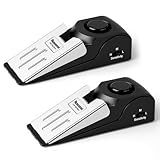
- Dual Function: The bottom with mesh rubber can prevent the door sliding. With alarm switch, it can be used as a door stop alarm or door stopper. Kindly notice: Door stop alarm fits for the inner pull door which the seam gap is 0.6 to 1.2 inch. Powered by 9 volt battery (not include).
- 3 Level of Sensitivities: There are high, medium and low levels of adjustment, and the pressure sensitivity can be adjusted according to different situations.
- Compact Size: The door stop alarm is lightweight and compact. The weight is only 4.5 ounces. You can easy to carry around to go anywhere.
- Loud Alarm: Alarm volume up to 120 DB. The loud alarm can scare off intruders and alert the homeowner. It can better protect you and your family.
- Safe and Easy to Use: No installation needed, simply place the alarm behind any door (at home, in a hotel, etc.) for all-day peace of mind.
What Sets It Apart: High‑damping rubber bearing that reduces floor wear.

Slide‑in design that sits behind the door; the sensor triggers a 120 dB alarm when the door moves. Weighs 4.5 oz and runs on a single 9 V battery with about a year of life.
Best For: Solo travelers who want a discreet, no‑install solution.
Pros:
- Loud 120 dB alarm.
- Fold‑in fabric floor mount – no tools.
- Lightweight and unobtrusive.
Cons:
- Battery not included.
- Only a single sensor placement works.
- Battery needs replacement after roughly a year.

- [Dual Function]: Can be used as a door stop alarm and door stopper, Its high damping rubber bearing can prevent the door sliding and prevent the bad guys into.
- [3 Level of Sensitivities]: Hige-Midium- Low Sensitivities. Which depends on the distance door touch the door stop alarm.
- [Loud Alarm]: Very loud shrill that would definitely scare someone away with 120db alarm. Weight: 4.5 oz.
- [Powered by 9V Battery]: Powered by 9V battery, One piece can be used for a year under normal circumstances. (Note: Battery not include)
- [Easy to Use]: NO installation required, Simply place the alarm behind any door (home, hotel, etc).
What Sets It Apart: Black stainless‑steel wedge with a non‑slip pad for slick surfaces.

Each wedge is just over five inches long, fits 0.6‑ to 1.2‑inch gaps, and sounds a 120 dB alarm. No tools; just pop in a 9 V battery and press the back button.
Best For: Travelers who need a portable, low‑profile wedge for hotel doors.
Pros:
- Very portable (≈3 oz each).
- Instant 120 dB alarm.
- No‑tool setup.
Cons:
- Battery not supplied.
- Only audible indicator for low battery.
- Requires a gap of at least 0.6 in.

- 【Warm Note】 While the door stop is equipped with a non-slip pad on the bottom and its textured surface ensures it remains non-slip during use, please note that it should not be used on slippery floor, and avoid leaving any water stains on the floor to prevent sliding.
- 【Loud Alarm】 Alarm volume up to 120 DB. Once someone opens the door and invades the room, our doorstop alarm wedge will make a super loud (120DB) alarm sound if there is any pressure on the door, which can easily alert you and others nearby and scare off the intruder. It a reliable addition to any security system.
- 【Dual Function】 When the door stopper alarm in "on" status and door pressure is applied,it will be triggered to make loud 120db alarm to scare off intruder.If the door stopper alarm in "off" status,it can be used as common damping rubber base door wedge, holding door in open position no any loud alarm sound.
- 【3 Sensitivity Levels】 There are 3 sensitivity levels - low, medium and high - with an adjustable sensitivity switch on the side. The sensitivity of the vibration sensor can be adjusted from low to high to meet your needs. The door stop alarms fit for the gap between the door and the ground be 0.6''-1.2''. Please note when the siren starts to sound small, it is time to change the 9V with a new one.
- 【Easy to Install】 No installation required, simply put 9v battery in and turn on the button "ON" on the back of the alarm then it can works. Our Security Doorstops devices can be installed in seconds without any tools.(9V battery not included)
What Sets It Apart: Dual‑function design from the Monsin brand, marketed as a “jet‑setter” wedge.

Two wedges weigh a total of just over 7 oz. Each triggers a 120 dB alarm when the door contacts the rubber bearing. Powered by a 9 V battery with about a year of life.
Best For: Travelers who want a lightweight, dual‑function wedge.
Pros:
- Acts as both door stop and alarm.
- Simple floor‑mounted setup.
- Adjustable sensitivity.
Cons:
- High‑pitch alarm can be uncomfortable for sensitive ears.
- Battery not included; needs yearly replacement.
- Only two units per pack; each protects a single door.

- [Dual Function]: Can be used as a door stop alarm and door stopper, Its high damping rubber bearing can prevent the door sliding and prevent the bad guys into.
- [3 Level of Sensitivities]: Hige-Midium- Low Sensitivities. Which depends on the distance door touch the door stop alarm.
- [Loud Alarm]: Very loud shrill that would definitely scare someone away with 120db alarm. Weight: 4.5 oz.
- [Powered by 9V Battery]: Powered by 9V battery, One piece can be used for a year under normal circumstances. (Note: Battery not include)
- [Easy to Use]: NO installation required, Simply place the alarm behind any door (home, hotel, etc).
Handle Alarms & Portable Locks
What Sets It Apart: 130 dB startle cue with both burst and continuous modes.

Each unit clamps onto metal, French, or plastic knobs using an included screw. Powered by two 9 V batteries, the alarm can emit a 30‑second burst or stay on continuously. Sensitivity is adjustable.
Best For: Parents, seniors, or anyone needing a tamper‑evident knob alarm.
Pros:
- 130 dB startle cue.
- No wiring; simple screw‑on install.
- Adjustable sensitivity and two sound modes.
Cons:
- Requires two 9 V batteries; frequent replacement in continuous mode.
- Only works on knobs or metal handles.
- Battery life limited when used continuously.

- Prevent Unwanted intruders Super Loud Alarm: 130 dB will startle the intruder and alert you of suspicious activities. Parents also use this to keep their kids safe as well as to prevent people with Dementia or Alzheimers from going where they're not suppose to go
- Simple and Quick Setup: No complex set up and wiring, the simple arm and disarm feature allows you to utilize one of two alarm modes (30 sec and continuous) and choose between sensitivity adjustment
- Compact and Portable: Use as home security, apartment security, in your bedroom sensor, or on your travels while staying at a hotel
- Secure your Home: Vibration door alarm works on any type of doorknobs, including metal, French, standard, and plastic doorknobs
- Package Contents: 2x Vibration Detection Alarms, 2x 9V Batteries, Mounting dry wall screw (for mounting on wall), User's guide
What Sets It Apart: USB‑C rechargeable lithium‑ion battery with up to a year of standby life.

The dual‑claw strike plate attaches to standard inward‑swinging doors in seconds. A 130 dB vibration alarm sounds when the lock is breached. The included travel pouch makes it easy to carry.
Best For: Travelers who want a portable, rechargeable lock‑and‑alarm combo.
Pros:
- Lightweight (0.3 kg) with travel pouch.
- 130 dB vibration alarm and adjustable sensitivity.
- USB‑C rechargeable battery lasts up to a year on standby.
Cons:
- Red housing may not match all décor.
- Alarm volume can disturb nearby occupants.
- Only compatible with doors that accept the dual‑claw strike.

- (2-in-1 Lock & Alarm System): Gain double the security with a strong lock and 130dB vibration alarm that triggers upon tampering. The hotel door lock is ideal for travelers, tenants, and homeowners wanting enhanced peace of mind.
- (Adjustable Siren Sensitivity Levels): Tailor alarm sensitivity (high, medium, or low) of our door locker to provide personalized protection in hotel rooms, apartments, and more.
- (Portable & Easy to Set Up): Compact, travel-friendly, and includes a convenient pouch, making the hotel lock easy to take on your travels. Quick setup ensures you feel secure wherever you go.
- (Rechargeable with Long Standby): This renter friendly door lock comes with a USB-C port, offering up to a year of standby time on a single charge, ideal for frequent travelers or home security.
- (Fits Most Swinging Doors): Built with a dual-claw strike plate, the portable travel door lock fits most standard doors, deadbolts, and commercial doors, making it a versatile and effective security solution.
What Sets It Apart: Integrated silicone wedge that hides the lock when not in use.

Fits inward‑opening doors with a 10–35 mm gap. A 9 V battery powers a 120 dB siren. The lock slides into place and can be tightened with a tiny screw, then hidden behind the silicone wedge.
Best For: Retirees, solo travelers, or frequent hotel guests who need an instant, tool‑free lock.
Pros:
- Tool‑free installation.
- 120 dB audible alarm.
- Compact (12.3 oz) and discreet when off.
Cons:
- 9 V battery not included.
- Only works on doors with a 10–35 mm gap.
- No warranty provided by the manufacturer.

- 【Multiple Protection】Combined with electronic door stop with alarm and portable door lock, it provides all-round security protection to stop intruders and prevent illegal break-ins. Ensure your safety at home, hotel or during travel to prevent unauthorized entry.
- 【Lightweight and portable, no installation required】Just place the door alarm at the bottom of the door and then fix the portable door lock suitable for various door types, without tools and cumbersome installation steps. Small and light, easy to carry, suitable for travelers, hotel guests and renters, providing security anytime and anywhere.
- 【Door Stop Alarm】In the "ON" state, once someone tries to break in, the security door stopper will block and issue a loud 120 decibel alarm (volume cannot be adjusted) to remind. The door stopper alarm can be used as a normal silicone base door wedge in the "OFF" state. The anti-slip design makes it difficult for the door to be pushed open, maximizing your safety.
- 【Suitable for doors that open inward】The door stoppers security is powered by a 9V battery (battery not included). The gap between the door and the floor should be 10 mm (0.39 inches) to 35 mm (1.38 inches). About the portable door lock for travel The gap between the door and the door frame must be greater than 0.08 inches. Note: door stopper alarm and hotel door locks for travelers security are only suitable for doors that open inwards.
- 【Safe Travel Gift】This Douevo hotel door locks & door stop alarm wedge safety set is a great gift for single women, elderly parents and travel enthusiasts. Especially suitable for people who travel frequently. Whether at home, in a hotel or traveling, Douevo door stop alarm can help you provide double extra security and privacy protection, and is a good helper when you live alone at home or travel on business.
High‑Volume Rechargeable Alarms
What Sets It Apart: Dual vibration + motion sensors with a flashing red LED for visual alert.

Charges via USB‑C in 2–3 hours and provides up to three months of continuous protection on a single lithium‑ion cell. The 42 g unit sits on any floor surface thanks to silicone grips.
Best For: Homeowners or renters who prefer a rechargeable unit over disposable batteries.
Pros:
- 130 dB siren + flashing LED.
- USB‑C rechargeable; up to 3 months per charge.
- Compact silicone base prevents floor damage.
Cons:
- Requires charging; no quick‑swap battery option.
- Monitors only a single door.
- Very loud alarm can be disruptive in close quarters.

- 130dB Dual Trigger Alarm: TECKNET door stoppers adopt vibration + motion dual-sensor technology, extremely reliable. If the door is opened or the door stop itself is moved, the alarm will be triggered, immediately sounding a piercing alarm of up to 130dB and flashing a red light to scare away intruders and alert you immediately. Using the door blocker makes your home life easier and more comfortable.
- USB-C Rechargeable: The door stopper has a built-in rechargeable lithium battery—no AAA replacements required. Easily charge your door alarm via a standard USB-C charging cable in 2-3 hour and enjoy up to three months of continuous protection. This door wedge is a suitable choice for everyday home security.Low Battery Alert: When the battery is low, the alarm beeps 3 times and the LED indicator flashes 3 times after powering on. Recharge the alarm promptly using the included charging cable once a low battery alert appears.
- Lightweight and Portable: This door jammer is small and lightweight, easy to carry, weighing only 42 grams. The door stopper wedge abandons the traditional button-type door stop design and does not snagging on cables or clothes—your perfect travel guardian.
- Infinitely adjustable sensitivity: This door blocker uses a roller to adjust the sensitivity to replaces the traditional three-level adjustment. This design allows you to fine-tune the siren's trigger point to accommodate a wider range of scenarios. Choose high sensitivity for maximum safety, or low sensitivity to prevent false alarms caused by vibration or accidental collisions, ensuring peace of mind.
- Sturdy and non-slip: The door stopper adopts an integrated silicone base, which can provide unparalleled anti-slip performance. It grips firmly on any floor surface (tiles, wood floors, carpets), and protects floors from scratches. It prevents the door from opening accidentally due to sliding.
What Sets It Apart: 130 dB vibration alarm paired with a rechargeable lithium‑ion battery.

Lightweight (0.31 kg) body fits inward‑swinging doors. The dual‑claw strike plate installs without tools, and a USB‑C port lets you recharge the internal battery.
Best For: Solo travelers or small‑business owners who need a loud, rechargeable alarm.
Pros:
- Tool‑free dual‑claw installation.
- 130 dB vibration alarm.
- Rechargeable battery lasts up to a year on standby.
Cons:
- Only compatible with inward‑swinging doors.
- No smartphone integration.
- Requires periodic USB‑C recharging.
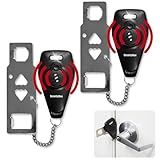
- (2-in-1 Lock & Alarm System): Gain double the security with a strong lock and 130dB vibration alarm that triggers upon tampering. The hotel door lock is ideal for travelers, tenants, and homeowners wanting enhanced peace of mind.
- (Adjustable Siren Sensitivity Levels): Tailor alarm sensitivity (high, medium, or low) of our door locker to provide personalized protection in hotel rooms, apartments, and more.
- (Portable & Easy to Set Up): Compact, travel-friendly, and includes a convenient pouch, making the hotel lock easy to take on your travels. Quick setup ensures you feel secure wherever you go.
- (Rechargeable with Long Standby): This renter friendly door lock comes with a USB-C port, offering up to a year of standby time on a single charge, ideal for frequent travelers or home security.
- (Fits Most Inward Swinging Doors): Built with a dual-claw strike plate, the portable travel door lock fits most standard doors, deadbolts, and commercial doors, making it a versatile and effective security solution.
Wireless Handle Alarm
What Sets It Apart: Three operating modes (off, chime, alarm) and a 30‑second delayed alarm.

Hangs on a standard door handle and runs on three AAA batteries. The 110 dB alarm can be heard up to 680 ft away.
Best For: Travelers, renters, or small‑business owners who want a flexible handle‑mounted alert.
Pros:
- 110 dB alarm audible over a long distance.
- Battery‑powered with three modes.
- No wiring required.
Cons:
- AAA batteries not included.
- Loud alarm may disturb neighbors.
- Only fits standard door handles.

- ATTENTION-GRABBING: Extremely loud 110dB alarm helps wake/alert homeowner or renter when vibration is detected, helping deter intruder and possibly notifying neighbors (audible up to 680-feet/205-meters away)
- USER-FRIENDLY & VERSATILE: Keep peace of mind with the 3 adjustable settings (off/alarm/chime); chime mode is ideal to alert you when children or guests are coming and going when you are at home; alarm mode features 30-second activation delay to prevent immediate false triggering, but sounds immediately when doorknob is touched anytime after the initial 30-second delay
- PERFECT FOR TRAVEL: Compact size makes this alarm perfect for home and travel. Feel safe wherever you go - use the alarm on entry doors, bedroom doors, houses, apartments, hotel rooms, or even dorm rooms
- EASY INSTALLATION: No wiring needed (requires 3xAAA batteries, not included); simply hang the alarm on the inside of your door handle - perfect for homes, apartments, dorm rooms, or travel!
- RELIABLE: Backed by over 45 years in the security industry and developed by the #1 pepper spray brand trusted by police and consumers worldwide.
Lock & Alarm Kits
What Sets It Apart: Combines a stainless‑steel lock with a 120 dB siren in a single portable package.

The kit includes a lock with two hole sizes and a 120 dB alarm that sits on any flat surface. Installation takes seconds with a simple snap‑in or screw.
Best For: Travelers and short‑term renters who want a combined lock and alarm.
Pros:
- Tool‑free installation.
- Loud 120 dB alarm.
- Lightweight (8 oz) and portable.
Cons:
- Requires a 9 V battery (not included).
- No built‑in battery; you must replace it.
- Works only on flat surfaces.

- 【Pay Attention】Not Suitable For All Doors. Look Into Before Buying!
- 【Package】1x Door Stop Alarm,This is an upgrade door stop than others;1x Portable security door tools,The upgraded portable door lock has two locking holes of different sizes, which is suitable for more kind doors.
- 【Portable Door Lock】This portable door lock provides you with extra security and privacy, greatly improving your security and preventing unauthorized entry. In case of an emergency you could remove the lock in seconds in the dark!which is a great helper for you when you are on business and trips, or live alone.
- 【Door Stop Alarm】This is an upgrade door stop than others,Stainless steel pressure plate,non-slip bottom,3 Sensitivity Levels - Low - Medium - High,with 120DB siren, Once someone opens the door,the door stopper alarm will go off in the first place,they will scaring away bad guys and helps wake you and give you time to find help.Require one 9v battery (Not include)
- 【Easy to Install and Portable】Small enough to carry in pocket or handbag.Easy to install or remove, Our Security Door lock Kit can be installed in seconds without any tools.
What Sets It Apart: Ultra‑lightweight (0.22 lb) design with a quick‑release bottom.

Features a pressure plate and non‑slip bottom for stability on slick tiles. Powered by a single 9 V battery.
Best For: Hotel guests and travelers who need a portable, lightweight lock‑alarm combo.
Pros:
- Compact and lightweight.
- 120 dB siren with selectable sensitivity.
- Quick‑release bottom for easy removal.
Cons:
- 9 V battery not included.
- Limited to doors that accept the two locking holes.
- Battery life can vary with sensitivity setting.

- 【Package includes】 1x Upgraded Door Stop Alarm, which is superior to other door stops; 1x Portable Door Security Tool, featuring an upgraded design with two locking holes of varying sizes to accommodate a wider range of doors.c
- 【Portable Door Lock】This portable door lock offers additional security and privacy, significantly enhancing your safety and safeguarding against unwanted entry. In emergency situations, you can quickly and easily remove the lock within seconds, even in the dark. It's an excellent companion for business trips, travel, or when living alone.
- 【Door Stop Alarm】This Door Stop Alarm is an upgrade from traditional models, boasting a sturdy stainless steel pressure plate and a non-slip bottom for added stability. It offers 3 sensitivity settings - Low, Medium, and High - and is equipped with a loud 120DB siren. When someone attempts to open the door, the alarm will sound instantly, deterring bad guys and giving you the time you need to react and find assistance. Please note, it requires one 9v battery (not included).
- 【Compact and Portable】 Our Security Door Lock Kit is small enough to fit in your pocket or handbag. It's incredibly easy to install or remove, and can be set up in just seconds without the need for any tools.
- 【Enhance Safety and Protection】 Our portable door lock is perfect for Hotels, Apartments, Dormitories, Bathrooms, and Bedrooms. And if you're not satisfied or encounter any issues while using it, we're here to help. We'll respond within 24 hours and work with you to find a suitable solution.
Factors to Consider When Choosing Hotel Room Door Alarms (Compact, Loud)
Alarm Volume Requirement
A minimum of 110 dB is advisable for hotel corridors where background noise can mask softer alerts. Units at 120 dB still deliver a clear 60 dB signal at ten meters, while 130 dB models can be heard even through thick walls—but be mindful of neighboring guests.
Placement Compatibility
Measure the door‑to‑floor gap; most hotel doors fall between 0.6 in and 1.2 in. Wedge‑style alarms need that clearance to trigger properly. Handle‑mounted alarms require a standard knob or lever.
Power Source Flexibility
Battery‑powered units (9 V alkaline or rechargeable lithium‑ion) give you instant deployment without needing a wall outlet. Rechargeable models use USB‑C and typically provide several weeks of active use before a recharge.
Sensitivity Settings Range
Three‑tier sensitivity (high, medium, low) lets you tailor the alarm to the room’s traffic. High sensitivity catches light nudges; low avoids false alarms in busy hallways.
Compactness & Portability
Look for devices under 5 inches tall and under 5 oz. That size slides easily into a backpack or luggage pocket and stays out of sight when not in use.
Warranty & Support
Choose products that offer at least a 30‑day return window and a manufacturer warranty covering defects and battery performance. A clear support hotline or online service portal is a plus for travelers on the road.
Frequently Asked Questions
How Do Travelers Remove Door Alarms After Check‑Out?
Most units detach by releasing a small latch or unscrewing a single screw. After removal, double‑check that the sensor is no longer powered before you pack up.
Do Hotel Door Alarms Affect In‑Room Wi‑Fi Signals?
Door alarms operate at low frequencies far away from Wi‑Fi bands (2.4 GHz/5 GHz), so they rarely interfere. Any brief hiccup usually occurs only when the alarm fires.
What Is the Legal Limit for Alarm Volume in Hotels?
U.S. fire‑alarm codes require a minimum of 85 dB at three seconds; many jurisdictions cap sustained alarms at 90 dB. The 120–130 dB alarms we reviewed exceed the minimum for safety but are brief, so they generally comply.
Can a Door Alarm Be Powered by the Hotel’s Power Outlet?
Some models offer AC adapters, but most travel‑oriented alarms are battery‑only to avoid dependence on hotel outlets and to keep installation tool‑free.
What Additional Gadgets Complement a Door Alarm for Enhanced Security?
Consider pairing a door alarm with a portable motion sensor, a smart lock, or a small battery‑backed camera for layered protection.
Conclusion
Choosing the right door alarm comes down to three things: loud enough to be heard, compact enough to travel, and simple enough to install in a hotel room without tools. The wedge‑style alarms give you a quick‑stop plus a blaring siren, while the rechargeable high‑volume models provide long‑term power without battery swaps. Pair any of these with a portable lock for extra peace of mind, and you’ll have a reliable, travel‑ready security solution for every stay.
