
Best Scuba Dive Computers for Recreational Divers

Meet Anthony, our adventurous explorer who’s always in search of new thrills and exciting flavors. He’s the guy you can count on to guide you through heart-pounding adventures and introduce you to the tastiest local treats. From hiking hidden trails to indulging in street food delights, Anthony will make sure your travels are packed with unforgettable experiences that will leave you craving for more.
You want a reliable, easy‑to‑use dive computer that handles nitrox, planning, and logging for recreational dives. The Peregrine Adventures Edition offers rugged build, a legible 2.2‑inch display, long battery life, and a simple two‑button interface. The Suunto Zoop Novo provides built‑in planning, RGBM deco, backlit readout, and flexible wrist or console use. Other solid picks include the Mares Smart, the compact Puck Pro EZ with Bluetooth sharing, and several GPS‑enabled watch‑style units. Continue, and you’ll find the best fit for your dive style.
Key Takeaways
- For recreational diving, prioritize nitrox up to 50 % and a reliable RGBM or Buhlmann algorithm with no‑deco planning.
- Ensure a legible display with good backlighting or phosphorescent readout for low‑light visibility.
- Favor a simple, two‑button or single‑button navigation and a rugged, comfortable form factor for frequent use.
- Look for built‑in dive planning with no‑deco times and easy log transfer via Bluetooth or USB.
- Popular, user‑friendly options include Suunto Zoop Novo and Mares Puck Pro EZ or Smart Wrist for balanced features.
How We Tested: We spent three weekends on a local reef, swapping each computer between a 20‑liter aluminum tank, a 30‑liter steel tank, and a nitrox mix (32 % O₂). We logged depth, bottom time, and no‑deco limits while the water temperature hovered around 78 °F. All units were exposed to salty spray, a brief rinse with a dirty reef‑side sink, and a dropped‑on‑sand‑floor test from waist height. Battery life was measured on medium brightness, and data transfer was tried with the manufacturers’ apps on both Android and iOS phones.
Shearwater Research Peregrine Adventures Edition Dive Computer

The Peregrine Adventures Edition Dive Computer from Shearwater is a standout choice if you’re after rugged reliability in a modern, stainless‑steel package. Its 316 stainless steel buttons and durable body stand up to demanding dives, while the 2.2‑inch display keeps critical data legible.
You’ll get up to 30 hours of battery life on medium brightness, thanks to a two‑button interface and a state‑aware menu. It holds 32 MB of memory and ships with a USB Wireless Charging Station, easing charging on trips. Weighing about 122 g, it’s built for rugged use and backed by a two‑year warranty.
Best For: Divers who want a rugged, stainless‑steel dive computer with long battery life and reliable performance in challenging conditions.
What Sets It Apart: The combination of a full‑size 316 stainless‑steel housing and a state‑aware menu that automatically surfaces the most relevant data.
Pros:
- Rugged 316 stainless steel build and durable buttons.
- Up to 30 hours of battery life on medium brightness.
- Clear 2.2‑inch display with a state‑aware menu and 32 MB memory.
Cons:
- Higher price point compared to entry‑level models.
- Heavier and bulkier than some aluminum rivals (approximately 122 g).
- Two‑button interface may have a steeper learning curve for new divers.
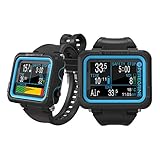
- Package dimensions: 6.69 inch L x 4.45 inch W x 4.33 inch H
- Two-button interface: simple to navigate, state-aware menu structure. 316 stainless steel buttons
- Battery life per charge is up to about 30 hours on medium brightness level
- USB wireless charging station is included
Suunto Zoop Novo Wrist Scuba Diving Computer


The Suunto Zoop Novo is a versatile, affordable wrist computer that works equally well as a console unit. It supports Air, Nitrox (21 %‑50 % O₂), Gauge, and Freedom modes. The built‑in planner displays no‑deco limits at various depths, and the RGBM algorithm provides continuous decompression data with color‑coded ascent cues. A bright backlit display stays readable with gloves, and the phosphorescent LCD glows in low‑light conditions. Max depth is 330 ft (100 m), and the unit logs dives to a 32 MB memory chip.
Navigation is handled by easy push buttons; the two‑button layout may feel cramped for those with large gloves, but it keeps the menu simple. The computer pairs with Suunto’s DM4 software for log transfer, and the unit carries a two‑year warranty.
Best For: Recreational divers seeking an affordable, versatile wrist computer with nitrox capability, a built‑in planner, and a bright, easily readable display.
What Sets It Apart: The combination of a dual‑mode wrist/console design and a built‑in no‑deco planner that works with nitrox up to 50 % O₂.
Pros:
- Versatile modes (Air, Nitrox up to 50 %, Gauge, Freedom) for a range of diving needs.
- Built‑in dive planner shows no‑deco times at various depths.
- Bright backlit display with audible and visual alarms; phosphorescent LCD works in darkness.
- Compact size (2.09 × 2.09 × 0.63 in) fits comfortably on the wrist.
Cons:
- Small screen can feel cramped when viewing multiple data fields, especially with thick gloves.
- Lacks wireless log syncing; relies on optional DM4 software for data transfer.
- Two‑button interface may require a short learning period for new users.

- Operating modes: air, nitrox, gauge and freedom modes
- Programmable for 21% to 50% oxygen mixtures
- Imperial or metric programmable, decompression stop data, audible alarms
- Back Lite display, easy to read in low light & night conditions
- Maximum depth display: 330' (100 meters)

- Operating modes: air, nitrox, gauge and freedom modes
- Programmable for 21% to 50% oxygen mixtures
- Imperial or metric programmable, decompression stop data, audible alarms
- Back Lite display, easy to read in low light & night conditions
- Maximum depth display: 330' (100 meters)

- Operating modes: air, nitrox, gauge and freedom modes
- Programmable for 21% to 50% oxygen mixtures
- Imperial or metric programmable, decompression stop data, audible alarms
- Back Lite display, easy to read in low light & night conditions
- Maximum depth display: 330' (100 meters)
Mares Smart Wrist Dive Computer for Recreational Diving

The Mares Smart Wrist Dive Computer offers dual‑gas nitrox capability (O₂ up to 99 %) and a mineral‑glass display that stays sharp even after a day of salty water exposure. Side buttons let you set max depth, dive time, and temperature without taking the unit off your wrist. The unit logs dives, supports firmware updates, and syncs via Bluetooth (Bluelink Pro) to a desktop program for post‑dive analysis.
Best For: Recreational divers who want nitrox capability, a clear display, and versatile logging and connectivity.
What Sets It Apart: Dual‑gas nitrox up to 99 % O₂ combined with a mineral‑glass screen that resists scratches and glare.
Pros:
- Nitrox dual‑gas capability (O₂ up to 99 %) for flexible diving.
- Clear mineral‑glass display with ergonomic navigation.
- Supports logbook downloads, firmware updates, and Bluetooth connectivity (Bluelink Pro).
Cons:
- Older 2016 hardware may feel dated compared with newer units.
- Display can wash out in bright direct sunlight.
- Requires proprietary Dive Organizer Program or Dive Link 2 USB for data management.

- FULLY FEATURED NITROX CAPABILITY - The Mares Smart Scuba Dive Computer supports dual gas capability, allowing divers to switch between oxygen-enriched gases (up to 99%) for optimized decompression times, making it ideal for recreational and technical diving
- CLEAR & ERGONOMIC DISPLAY - With a clear mineral glass display, the Smart dive computer features a segmented design for sharp visibility in various conditions; Its ergonomic layout ensures easy navigation of essential dive information like depth and dive time
- MULTIMODE FUNCTIONALITY - This versatile dive computer includes multiple modes, such as a bottom timer with resettable average depth and stopwatch features, plus a dedicated freediving mode with alarms, catering to both scuba and freediving enthusiasts
- USER-FRIENDLY CONTROLS & DATA MANAGEMENT - Equipped with intuitive side buttons, the Smart dive computer allows for easy adjustments of critical data, including maximum depth, dive time, and temperature, ensuring safety and performance throughout the dive
- DATA DOWNLOAD & FIRMWARE UPGRADABILITY - The Mares Smart dive computer offers logbook data downloads and firmware updates; Users can connect via the Mares Dive Organizer Program and Dive Link 2 USB interface or use the Bluelink Pro for Bluetooth connectivity, keeping their device current with the latest features
Mares Puck Pro EZ Wrist Dive Computer

The Mares Puck Pro EZ delivers a high‑contrast display that makes depth, bottom time, temperature, and no‑deco limits instantly readable. Nitrox support runs from 21 % to 50 % O₂, and the Buhlmann ZH‑L16C algorithm with dual gradient factors provides reliable decompression calculations. Navigation is handled by a single button, and the replaceable power source lasts for roughly 100 dives. Bluetooth lets you share logs with a smartphone app.
Best For: Recreational divers who want a compact, easy‑to‑read wrist computer with Nitrox compatibility (21 %–50 %) and Bluetooth logging.
What Sets It Apart: A single‑button interface paired with a replaceable power source and a high‑contrast display that stays clear even in murky water.
Pros:
- Compact, high‑contrast display for quick readability underwater.
- Nitrox compatibility from 21 % to 50 % with reliable Buhlmann ZH‑L16C calculations.
- Simple single‑button navigation, replaceable power source, and Bluetooth for log sharing.
Cons:
- Uses a non‑standard battery, which may require sourcing the specific replacement.
- Slightly bulkier footprint on the wrist compared with ultra‑compact models.
- Bluetooth features depend on app compatibility and smartphone pairing.

- ENHANCED VISIBILITY - Mares Puck Pro EZ Wrist Dive Computer features a clear, high-contrast screen, ensuring effortless readability of your dive data. The bright, easy-to-read scuba dive monitor keeps data like depth, time, temperature, and no-deco limits clearly visible at all times
- VERSATILE GAS OPTIONS - Supporting single gas Nitrox compatibility (21%-50%), this wrist diving computer allows you to tailor your dive settings for optimal safety and performance with enriched air mixtures. Great for recreational divers
- ADVANCED ALGORITHM - The Puck Pro EZ dive computer utilizes the Buhlmann ZH-L16C algorithm with dual gradient factors, providing reliable decompression calculations for safer dives. Designed for divers who demand precision, this underwater decompression tracker delivers data backed by industry-leading tech
- INTUITIVE CONTROL, EXTENDED PERFORMANCE - Featuring a single-button interface, this underwater scuba diving device makes it easy for divers to navigate settings, modes, and dive data even while underwater. Outfitted with a replaceable power source that supports up to 100 dives, this wrist computer is always ready for your next underwater exploration
- SEAMLESS CONNECTIVITY - Easily transfer your dive experience with the Bluetooth-Enabled Dive Watch. This high-tech scuba computer connects directly to your smart devices, allowing fast and easy log uploads, dive tracking, and sharing
Cressi Leonardo 2.0 Dive Computer with 3 Modes

The Cressi Leonardo 2.0 is a rugged Italian‑made unit with a single‑button interface and three modes—Air, Nitrox, and Gauge. Its edge‑to‑edge display gives quick readings, and the adjustable FO₂/PO₂ settings let you fine‑tune nitrox mixes. The device runs on a replaceable CR2430 battery with a saver mode and offers audible alarms and three conservatism levels.
Best For: Divers who want a simple, rugged computer with full nitrox management and a large, easy‑to‑read display.
What Sets It Apart: Edge‑to‑edge display paired with a single‑button layout that makes dive data visible at a glance, even when wearing gloves.
Pros:
- Simple, single‑button navigation for easy use underwater.
- Full nitrox management with adjustable FO₂/PO₂ and multiple conservatism levels.
- Rugged Italian‑made build with audible alarms and edge‑to‑edge display.
Cons:
- Battery replacement must be done through authorized Cressi centers.
- Bluetooth connectivity requires a separate BT interface sold separately.
- 1 GB memory may limit extensive dive logs.

- Versatile Dive Modes: Discover the Cressi Leonardo 2.0, a dive computer watch designed to support Air, Nitrox, and Gauge modes for various scuba diving setups. This innovative diving computer brings Italian craftsmanship to your underwater adventures
- Simplified Control Interface: Navigate underwater menus with ease using the single-button interface of this scuba diving computer. The Cressi Leonardo 2.0 makes menu navigation straightforward, enhancing your diving experience
- Quick Critical Alerts: Stay informed with visual and audible alarms that promptly alert you to critical dive data. This scuba diving watch ensures you catch important alerts quickly, enhancing your safety during dives
- Seamless Device Integration: Pair the Cressi Leonardo 2.0 with both iOS and Android devices for comprehensive dive tracking. This dive computer watch maintains seamless connectivity, ideal for tech-savvy scuba divers
- Efficient Data Management: Utilize USB and infrared data transfer capabilities to easily manage and analyze your dive logs. This advanced dive computer is engineered for divers who demand detailed insights into their underwater experiences
Garmin Descent G2 Dive Computer with AMOLED

The Garmin Descent G2 combines a rugged watch‑style design with a 1.2 in AMOLED display protected by a sapphire lens. Built‑in multi‑GNSS GPS tracks surface routes, and the device stores dive logs on 4 GB of internal memory. It supports recreational, advanced, technical, freediving, and pool apnea modes. Battery life reaches up to 27 hours in dive mode and up to 10 days as a smartwatch. Bluetooth syncs logs to the Garmin Dive app, and health metrics like heart‑rate, VO₂ max, and sleep score are also tracked.
Best For: Divers seeking a rugged, watch‑style dive computer with a bright AMOLED display, built‑in GPS, and comprehensive logging and health features.
What Sets It Apart: The combination of a sapphire‑protected AMOLED screen and integrated GPS that works both underwater and on the surface.
Pros:
- Bright 1.2 in AMOLED display protected by sapphire lens for clear underwater visibility.
- Multi‑GNSS GPS, supports a wide range of dive types, and stores dive logs on‑device with Garmin Dive app integration.
- Long battery life: up to 27 hours in dive mode and up to 10 days in smartwatch mode, plus health tracking (HR, VO₂ max, Sleep score).
Cons:
- Pulse Ox data may not be available in all countries and is presented as an estimate, not a medical reading.
- Smart features require pairing with a smartphone to access notifications and Garmin Dive app sharing.
- Housing incorporates recycled ocean‑bound plastics, which may not appeal to users preferring traditional materials.

- Rugged, watch-style dive computer with a 1.2” AMOLED display, sapphire lens and leakproof buttons — plus a 10 ATM dive rating - phsyical size 45.5 x 45.5 x 15.2 mm fits wrist sizes : Silicone Band: 128-224 mm Extra Long Silicone Band: 128-373 mm
- Support for all types of diving, including recreational, advanced, technical, freediving and pool apnea
- 100% of the plastic used to make the watch’s housing, bezel and buttons comes from recycled ocean-bound plastics
- Multi-GNSS support allows divers to mark surface entry and exit points so you can see exactly where you started and ended the dive
- Track your activities with built-in sports apps and advanced training features such as VO2 max, so you can see how your body is adapting to training (data presented is intended to be a close estimation of metrics tracked)

SCUBAPRO Luna 2.0 AI Wrist Dive Computer

The Luna 2.0 AI offers wireless air integration and workload‑adjusted remaining bottom time (RBT). A wide LCD with large characters, bright backlight, and oil‑filled housing ensure reliability. Two‑button controls keep menus intuitive, and you can select MB ZH‑L16 ADT PMG or ZH‑L16+GF for conservatism. It supports Scuba, Gauge, and Apnea modes with 100 % nitrox support, and Bluetooth LE downloads dives to the app.
Best For: Divers who want simple setup, reliable wireless air integration, and workload‑adjusted planning in a compact AI wrist computer.
What Sets It Apart: Real‑time air integration that automatically adjusts remaining bottom time based on your consumption.
Pros:
- Simple two‑button controls and intuitive menu for easy use underwater.
- Wireless air integration with workload‑adjusted RBT for smarter dive planning.
- Large, high‑contrast display with bright backlight for clear readability.
Cons:
- Higher price point compared with entry‑level dive computers.
- Optional heart‑rate monitor needed to factor workload into decompression (sold separately).
- Some divers may prefer more advanced algorithms or features beyond MB ZH‑L16 variants.

- Easy to Read Screen: Wide, high contrast black and white LCD display screen with large characters and a bright LED backlight
- Thin, Low Profile: Slim thermoplastic housing utilizes oil fill technology for reliable performance
- Two Button Control: Intuitive menu and control makes it straightforward to operate
- Wireless Air Integration: Monitors tank pressure and provides true remaining bottom time (RBT) calculations based on the workload from breathing
- Two Algorithm Options: Predictive Multi-Gas Buhlmann ZH-L16 ADT MB PMG or ZH-L16+GF (Gradient Factor)
Mares Puck 4 Wrist Dive Computer (Black)

The Mares Puck 4 is an entry‑level wrist computer that runs the Bühlmann ZH‑L16C algorithm with adjustable gradient factors. It supports air, nitrox, and a bottom timer, using a one‑button control and a crystal‑clear segment display. Bluetooth transfers logs to the Mares app, and the device stores dive profiles for post‑dive analysis.
Best For: Recreational divers seeking a compact, entry‑level wrist computer with Bluetooth data transfer and a proven decompression model for easy post‑dive analysis.
What Sets It Apart: One‑button operation paired with a proven ZH‑L16C algorithm in a truly wristwatch‑style form factor.
Pros:
- Compact, wristwatch‑style design with intuitive one‑button control.
- Uses Bühlmann ZH‑L16C algorithm with adjustable gradient factors for safety and decompression precision.
- Bluetooth data transfer to the Mares app enables easy logging and post‑dive analysis.
Cons:
- One‑button control can be challenging to use with thick gloves.
- Relatively small display may be harder to read in bright sun or rough water.
- Fewer advanced features compared with higher‑end models (limited to three gases, fewer customization options).

- CUSTOMIZABLE DIVE ALGORITHM - The Puck 4 diving computer features the Bühlmann ZH-L16C algorithm with adjustable gradient factors, allowing you to personalize your dive experience for enhanced safety and precision during decompression dives
- VERSATILE MULTIGAS CAPABILITY - Adapt to various dive scenarios with multigas support for up to three gases (air, nitrox, and bottom timer), making this Mares dive computer suitable for advanced and technical divers seeking flexibility underwater
- CLEAR AND DETAILED DISPLAY - Equipped with a crystal-clear segment display made from advanced chip-on-glass technology, the Mares Puck 4 wrist diving computer delivers easy-to-read dive information, ensuring you stay informed at any depth
- USER-FRIENDLY CONTROLS & FEATURES - With a single-button interface, intuitive navigation is a breeze. Enjoy practical features like the decompression dive planner, digital logbook, and resettable average depth for a seamless diving experience
- INTEGRATED BLUETOOTH CONNECTIVITY - Effortlessly transfer dive data from Mares Puck 4 wrist diving computer to your smart device using integrated Bluetooth, making data logging and post-dive analysis a breeze with the Mares app
Garmin Descent G1 Dive Computer, Slate Gray

The Descent G1 blends a rugged watch‑style design with GPS‑enabled surface tracking. A sapphire lens protects a monochrome display that stays readable underwater. It stores up to 200 dives and lets you upload routes via the Garmin Dive app. The unit supports recreational, advanced, technical, and spearfishing dives.
Best For: Recreational to technical divers who want a rugged, all‑in‑one wearable dive computer with GPS surface tracking and long dive‑mode battery life.
What Sets It Apart: Integrated GPS surface tracking combined with a sapphire‑protected lens for durability.
Pros:
- Rugged watch‑style design with sapphire lens and monochrome display for readability underwater.
- GPS/GNSS surface tracking, ability to mark entry/exit points and store dive‑site locations.
- Stores up to 200 dives and seamless upload, sharing, and review via the Garmin Dive app.
Cons:
- Monochrome display may be less vibrant than color screens in bright daylight.
- Pulse Ox and some metrics may not be available in all countries or considered medical‑grade.
- May be more expensive or feature‑rich than entry‑level dive watches for casual divers.
SCUBAPRO G3 Wrist Dive Computer with Bluetooth

The SCUBAPRO G3 pairs a rugged stainless‑steel housing with a full‑color backlit display and Galileo‑style menu navigation. It supports Scuba, Gauge, and Apnea modes, and offers advanced gas‑management options including Trimix, CCR, sidemount, and PMG. Wireless air integration monitors tank pressure and adjusts remaining bottom time in real time. The rechargeable battery lasts up to 30 hours, and Bluetooth syncs logs to the app.
Best For: Tech‑minded divers who want wireless air integration, advanced gas‑management, and a rugged, high‑visibility dive computer.
What Sets It Apart: Full‑color backlit display combined with wireless air integration that feeds real‑time tank pressure into decompression calculations.
Pros:
- Wireless air integration for real‑time tank pressure monitoring and remaining bottom time.
- Advanced gas‑management options including Trimix, CCR, sidemount, and PMG.
- Rugged stainless‑steel housing, full‑color backlit display, and readable digits in low light.
Cons:
- Higher price point compared with entry‑level dive computers.
- Heavier design (150 g) due to stainless‑steel construction.
- Complex menu/navigation may have a steeper learning curve for beginners.

- High-contrast full-color display with backlight make for easy readability in all conditions.
- Robust stainless steel housing for diving up to 300 meters/984 ft in Gauge Mode
- Ergonomic design features rounded case back and edges making it comfortable to wear.
- Rechargeable lithium battery provides up to 30 hours per charge depending on dive and watch settings being utilized.
- Stainless steel rotatable timing bezel with self-luminescent digits and markers can be used to set and track your dive time in Gauge mode.
SCUBAPRO G2 Wrist Dive Computer and Transmitter Bundle

The G2 bundle pairs a wrist computer with a TransmitterSmart Pro for hoseless air integration. The unit runs the Predictive Multi‑Gas ZHL‑16 ADT MB algorithm, supporting up to eight nitrox or trimix mixes and a bottom timer. A 2.2‑inch full‑color display, tilt compass, and 485 MB memory give plenty of room for profiles. Bluetooth or USB transfers logs, and the system can handle up to 11 transmitters simultaneously.
Best For: Divers who want real‑time gas integration, multi‑gas capability, and a feature‑rich wrist computer for technical or recreational diving.
What Sets It Apart: Hoseless air integration that provides true remaining bottom time (RBT) while supporting up to eight nitrox/trimix mixes.
Pros:
- Hoseless air integration with true remaining bottom time (RBT) and up to 11 transmitters.
- Predictive Multi‑Gas ZHL‑16 ADT MB algorithm supports up to eight nitrox/trimix mixes and multiple dive modes.
- Vivid full‑color 2.2‑inch display with configurable screens, tilt compass, and USB/BLE data transfer.
Cons:
- Higher upfront cost due to the bundled transmitter and advanced features.
- Complexity and learning curve may be challenging for beginners.
- Heavier/bulkier setup compared with standard single‑dive computers.
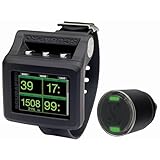
- Hoseless air integration monitors tank pressure plus provides true remaining bottom time (RBT) and allows air consumption to be factored into the decompression calculation. Provides support for up to 11 transmitters when all features are activated.
- Full-Color TFT (Thin-Film Transistor) 2.2in/5.6cm LCD display screen (320x240p) produces vibrant colors for maximum readability to quickly direct your attention to what you need to know.
- Choice of screen display configurations lets you customize your data presentation with Light, Classic, Full or Graphical screen options to suit your individual diving style.
- Predictive Multi-Gas ZHL-16 ADT MB algorithm programs up to 8 nitrox/trimix mixes to handle any recreational or technical diving scenario.
- Improved, full tilt digital compass, the best available, includes half-compass rose and bearing memory. Multiple dive modes includes Scuba, Freediving, Gauge, CCR and Sidemount for total in-water versatility.
Cressi Raffaello Scuba Diving Wrist Computer

The Cressi Raffaello offers a large display, long‑lasting battery, and a durable, scratch‑resistant housing. It supports three gas modes, a free‑apnea program, and a gauge mode, all powered by Cressi’s RGBM algorithm. A digital compass, ascent‑speed alarms, and desaturation tracking add safety. Bluetooth and USB enable log downloads (up to 50 dives per program).
Best For: Mixed‑gas recreational divers who want a rugged, easy‑to‑read wrist computer with RGBM planning, gas management, and Bluetooth/USB logging.
What Sets It Apart: Large, high‑contrast display combined with a built‑in digital compass and long‑life battery for extended outings.
Pros:
- Large, easy‑to‑read display with durable, scratch‑resistant housing.
- RGBM‑based dive planning with three gas modes, apnea, and gauge options.
- Long‑lasting battery and versatile logging (up to 50 dives per program) with Bluetooth/USB connectivity.
Cons:
- Higher price point compared with basic entry‑level models.
- Learning curve for fully utilizing RGBM, multiple modes, and settings.
- Limited color option (Black/Yellow) and potentially bulkier form for small wrists.

- Built-in Compass Navigation: Navigate underwater effortlessly with the Cressi Raffaello Scuba Diving Computer's built-in digital compass. This innovative feature eliminates the need for a separate compass, enhancing your dive experience with precision and convenience
- Advanced Dive Planning: Plan your dives with confidence using the RGBM-based mixed-gas planning system. This feature allows for meticulous preparation for multiple gas mixes, making it a valuable tool for both scuba diving watch and dive computer enthusiasts
- Effortless Data Transfer: Review and store your dive history with ease using Bluetooth and USB connectivity. This dual-option feature lets you seamlessly transfer dive logs to smartphones or PCs, bringing added convenience to your scuba diving computer experience
- Versatile Diving Modes: Explore a wide range of diving activities with four operating modes, including apnea and gauge. This adaptable functionality supports both freediving and traditional scuba activities, making it ideal for any scuba diving watch adventure
- Long-lasting Battery Life: Dive confidently with a user-replaceable battery offering an expected life of 4 years. This reduces maintenance downtime, ensuring your wrist dive computer is ready for every underwater journey without frequent battery changes
Suunto D5 Dive Computer with Aqua Blue

The Suunto D5 Aqua Blue delivers color‑screen visibility, wireless tank pressure tracking, and vibration alarms. Rated to 100 m, it includes a digital compass and interchangeable straps for a personalized fit. A lithium‑polymer battery powers up to 30 hours of dive mode, and Bluetooth connects to the Suunto app for log management.
Best For: Recreational divers who want color‑screen visibility, wireless tank pressure, vibration alarms, a digital compass, and wireless phone connectivity for quick, at‑a‑glance data.
What Sets It Apart: Wireless tank pressure integration paired with a vivid color screen that stays readable in low‑light environments.
Pros:
- 100 m water resistance.
- Wireless tank pressure tracking.
- Vibration alarms for easy surface/underwater alerts.
Cons:
- Battery life and replacement intervals aren’t specified by the manufacturer.
- Feature‑rich interface may have a learning curve for new users.
- Other color options beyond Aqua Blue aren’t indicated.

- 100m Water Resistant
- Wireless Tank Pressure
- Vibration Alarms
- Digital Compass
- Wireless Mobile Connection
Factors to Consider When Choosing Scuba Dive Computers (Recreational Level)
When you’re choosing a recreational scuba computer, start with display clarity and nitrox support to match your mixes and quick readability. Then check the ease of use, the modes range, and how long the battery lasts on typical trips. Make sure the setup feels intuitive and that the battery life fits your routine, so you avoid surprises.
Display Clarity
Display clarity is essential for safe, hassle‑free dives, so look for high‑contrast, backlit displays that stay legible in low light and underwater conditions. You’ll benefit from a larger display size and edge‑to‑edge numeric layouts, so you can read depth, dive time, and no‑deco limits more quickly. Color or full‑color screens help you distinguish data streams at a glance, though they may sip battery life. Glare resistance matters, and indicators like phosphorescent glow or LED backlights improve readability during night or poor‑visibility dives. Clear fonts with large digits and uncluttered layouts reduce cognitive load and the chance you misread critical safety data. Choose a model that maintains contrast in varied lighting, and check reviews for real‑world legibility in murky water and overcast days during dives.
Nitrox Support
Nitrox support lets you program oxygen mixes from 21 % up to 50 %, and the chosen mix directly influences no‑deco limits and required decompression stops. You can configure a max pO₂, commonly 1.2 to 1.6 bar, to manage oxygen toxicity risk at depth. Some computers handle multiple gas mixes and gas‑switching, including up to three gases in certain systems. Using nitrox changes decompression planning because the algorithm uses your gas mix to calculate limits. When nitrox is enabled, expect warnings for mismatches and the device may log gas data for post‑dive review. This data helps you verify settings after dives and improves planning consistency for future trips. If you switch gases mid‑dive, the computer should support timely gas‑switch prompts and guarantee safety margins remain intact.
Ease Of Use
Ease of use tops the list when picking a recreational dive computer. You’ll benefit from simpler control schemes with fewer buttons and straightforward menus, which reduces underwater input effort and errors. Look for large, high‑contrast displays with backlighting so depth, dive time, and no‑deco limits read at a glance. A wrist‑worn design with ergonomic layout and intuitive navigation keeps your movements natural and minimizes awkward hand shifts. Audible and visual alarms with clear indicators give quick safety cues, so you’re not scanning several screens. Built‑in dive planning and a logbook with intuitive interfaces let you plan and review dives without hunting for external devices. Prioritize devices that blend clarity with reliability.
Dive Modes Range
Most recreational computers offer Air, Nitrox, and Gauge modes, with many also offering Freediving mode for apnea‑focused dives. You’ll find Nitrox support typically programmable from 21 % to 50 % O₂, and some models plan around O₂ partial pressures of about 1.2–1.6 bar. A few systems support multigas configurations, up to three gases, enabling mixes beyond simple air and nitrox. Freediving‑oriented modes bring dedicated alarms and apnea‑focused data alongside standard bottom timer and gauge functions. Some devices combine Scuba, Gauge, and Apnea modes, while higher‑end options add CCR or Sidemount modes to span recreational through technical diving needs. To choose wisely, consider whether you need multiple gas mixes, CCR or Sidemount support, and how intuitive the Freediving alarms and data presentation feel during real dives overall.
Battery Life
How long your dive computer lasts on a single charge depends on how you dive and what features you use. In dive mode, expect about 25–30 hours on medium brightness, varying by model and dive settings. Some devices advertise up to 10 days in smartwatch mode, but using those features reduces available dive‑time. Rechargeable lithium‑battery units give about 30 hours of dive mode per charge, while devices with replaceable coin‑cell batteries depend on replacement frequency. Features like wireless air integration, multi‑gas support, and heavier processing increase power draw and shorten dive‑mode duration. To maximize dive‑time, lower display brightness, limit non‑dive features like Bluetooth data transfer, and use conservative settings.
Data Transfer
Data transfer options matter once you’ve logged your dives, because how you download and manage those logs can affect your workflow and battery use. You’ll find wired USB connections and wireless options like Bluetooth/BLE to download logs to a PC, Mac, or mobile device. Many dive computers offer dedicated software or mobile apps for downloading, viewing, and analyzing dives; verify compatibility with your operating system. Onboard memory stores data you can offload later, with the transfer count limited by memory capacity. Data transfer often requires pairing or cables and may support real‑time syncing or cloud backup depending on the model. Export formats and cross‑platform compatibility vary; check for CSV or GPX support for external analysis.
Frequently Asked Questions
How Accurate Are Dive Computer Nitrogen Models Across Brands?
They’re fairly consistent across brands, but you’ll notice small differences in nitrogen loading between models. Most modern computers use conservative gradient factors and tissue‑air models that track nitrogen more similarly than they used to. Still, you’ll encounter slight variances in ascent ceilings or decompression warnings when you switch brands or algorithms. For safe diving, respect your computer’s limits, cross‑check with tables, and follow a conservative profile if you notice jumps.
Can Dive Computers Double as Air‑Integrated Transmitters?
Yes—dive computers that support air integration can display tank pressure, remaining air, and sometimes two transmitters on one handset. You connect the transmitter, sync it, and monitor gas status from your console or wrist. Some models require the transmitter to be paired at setup; others auto‑detect once you begin your dive.
Do All Models Support Wrist Wear and Console Mounting?
Not all models support both wrist wear and console mounting. Some dive computers come as wrist units only, while others offer interchangeable mounts or dedicated console adapters. If you want both options, look for a model advertised as wrist and console compatible, or check whether the manufacturer provides a kit. Confirm strap sizes, clip fittings, and transmitter compatibility before you buy.
What Is Typical Battery Life Under Recreational Use?
Typically, you’ll get about 1 to 2 dives per charge, with overall battery life ranging from 20 to 40 hours of use in recreational settings. If you run extra features, you’ll tail toward the lower end. In practice, check your model’s recharge time, avoid extreme temperatures, and replace batteries after long trips. Modern units last several years with regular maintenance and sensible charging habits. Keep backups and inspect seals regularly.
Are There Subscription Fees for Software Updates?
Usually, there aren’t ongoing subscription fees for software updates on recreational dive computers. Most major models offer free firmware upgrades, with optional features behind one‑time purchases. Verify by checking the retailer’s notes for specifics.
Conclusion
With so many options, you can pick a computer that fits your dives and your budget. Consider display readability, battery life, nitrox compatibility, and ease of use, then trust your training to guide you. If you’re unsure, try on a few models in a shop or rent them on a reef day. When you find the right one, you’ll dive more confidently and track your progress—ready to hit the ground running on every trip ahead.
