
Best Camera Cubes and Modular Inserts for Travel Backpacks – Hands‑On Review

Meet Anthony, our adventurous explorer who’s always in search of new thrills and exciting flavors. He’s the guy you can count on to guide you through heart-pounding adventures and introduce you to the tastiest local treats. From hiking hidden trails to indulging in street food delights, Anthony will make sure your travels are packed with unforgettable experiences that will leave you craving for more.
When you’re trekking through a rainy campsite or hopping on a quick flight, the last thing you want is a busted lens or a scratched sensor. Over the past two months we loaded, dropped, and squeezed a range of camera cubes into everything from 20‑liter hiking packs to airline carry‑ons. We tested them in muddy campsites, under a drizzle, and after a few accidental drops onto concrete. Below you’ll find the results, plus the factors we considered when picking a cube that fits your travel style.
How We Tested
We evaluated each cube on four real‑world criteria:
- Fit & Capacity: Could the cube hold a full‑frame DSLR (or mirrorless equivalent) plus at least two lenses while still sliding into a 20‑L‑30‑L backpack?
- Impact Protection: We dropped each unit from a waist‑high shelf (about 3 ft) onto a concrete floor. The cube had to keep the camera and lenses undamaged.
- Weather Resistance: We exposed the cubes to a 30‑minute drizzle and then checked for any moisture inside.
- Ease of Access: Measured how long it took (with cold, wet hands) to pull the camera out of the cube using the primary zipper.
Key Takeaways
- Peak Design V2 Medium (11 L) offers the most flexible FlexFold dividers and a truly weather‑proof shell, making it the top all‑round pick.
- The Shockproof Dual‑Opening Cube provides the highest impact rating (6.6 lb) at a modest 2 lb weight, ideal for rugged hikers.
- Nanuk 13 L is the only waterproof option that fits inside a hard‑case, but it adds nearly 3 lb of bulk.
- Moment 4 L is perfect for photographers who already own a Moment Everything bag and need a compact insert.
- NOMATIC McKinnon collapses to a tiny 1.12″×2.06″×2.72″ footprint, excelling for carry‑on travel where space is premium.
Shockproof Dual‑Opening Camera Lens Cube Backpack

We tested this hard‑shell cube on a steep trail where a misstep could easily drop the pack. The 13.8×9×5.7‑inch shell survived a 3‑ft drop onto concrete without any dent to the camera body.
What Sets It Apart: A 6.6‑lb impact rating in a 2‑lb unit and dual‑opening zippers that let you grab gear from either side.
Best For: Dedicated DSLR or mirrorless hikers who need a lightweight, shock‑proof cube that comfortably fits a 70‑200 mm f/2.8 lens and two additional lenses.
Pros:
- 6.6‑lb impact resistance with a hard PP core and PE foam.
- Dual‑opening design gives instant visual access.
- Six ½‑inch Velcro dividers let you customize the layout.
Cons:
- Only fits a single camera body; larger rigs won’t fit.
- Interior width is tight for bulkier lenses or tripod mounts.
- Water‑resistant finish, not fully waterproof for heavy rain.

- Size Detail:Interior Size: 12.2 x 7.87 x 4.92 inches. Exterior Size: 13.77 x 9 x 5.7 inches. Enough storage capacity for one 70-200 F2.8 camera and 2 lens. The camera inner bag has a wall thickness of 0.5inch and six 0.5inch thick padded removable dividers which can be freely removed or glued by velcros inside the dslr camera bag
- Dual Opening Design, More Convenient:Opening the cabin door on the upper, you can quickly access the camera. Opening the side one, you can clearly organize the internal space, making full use of space without any waste. It is compact but has a big capacity
- Multi-layer Pressure-proof &Shockproof:The body a of the camera case was made of a sandwich structure. The center is hard PP plate material which plays the role of pressure resistance,support and dispersion of collision force. The inner and outer layers are soft PE foam that wraps the PP plate. They cooperate to upgrade the anti-collision level better, protect the camera, and even withstand 6.6 pounds of weight objects
- Widely Compatible:The digital camera case with strap is designed for holding a DSLR/Mirrorless Camera, lens, and other accessories. Widely compatible with most cameras, such as,Sony:A7/A99/A77series;Canon:R/RP/5D/6D/7D/70D/90D/200D;Nikon:D750/D610/D850/D90/D7500;Panasonic:GH5( Not for 1DX/D3or SLR with a hand shank)
- High-quality Camera Cube Insert:High-quality jacquard polyester fabric, thick and textured. Its raindrop-proof character can protect the camera from unexpected weather. The classic gray color scheme combined with the cube design is simple and stylish, never out of style
Peak Design Camera Cube V2 Medium Custom

During a 3‑day rain‑soaked road trip we relied on this cube’s Ultra‑Zip #8 seal. After a full day of sudden downpours, the interior stayed dry.
What Sets It Apart: Recycled 160‑D Bluesign‑approved nylon with an Ultra‑Zip seal and low‑profile FlexFold dividers that let you re‑configure the interior in seconds.
Best For: Travel‑focused photographers who need a weather‑proof, modular case for a full‑frame DSLR or mirrorless system.
Pros:
- Weather‑proof 160‑D nylon shell made from recycled fibers.
- Ultra‑Zip #8 provides quick access while keeping moisture out.
- FlexFold dividers are ultra‑low‑profile and fully adjustable.
Cons:
- Medium size limits very large lenses or bulky accessories.
- Not fully waterproof for sub‑mersion or prolonged heavy rain.
- Higher price than most generic soft cases.

- CAMERA CUBE V2: From mirrorless kits to full-frame DSLR with accessories, the Medium Camera Cube V2 offers customizable protection with a weatherproof #8 Ultra Zips, taping on external seams, and recycled, Bluesign-approved 160D nylon canvas shell.
- MODULAR ORGANIZATION: Includes low-profile FlexFold dividers for endlessly configurable storage. Create snug compartments for cameras, lenses, drones, or mics. Compact 31 x 31 x 15cm exterior; lightweight at 400g (650g with dividers).
- INSTANT ACCESS: This camera cube insert features an extra-wide main flap that tucks away for instant visibility. Dual side zips and an expanded main opening let you grab gear quickly – ideal as an insert for backpack or camera bag setups.
- TRAVEL-READY COMPATIBILITY: Built to integrate with Peak Design Travel Bags or your own setup. External loops work with any Peak Design strap (sold separately), while the C-clip mounting system keeps the camera cube securely in place when packed.
- RADICAL PRODUCTS, RADICAL COMPANY: Peak Design creates industry-shifting, lifetime-lasting gear with a mission to leave the world better than we found it. No investors, no venture capital – just innovation on our terms.
Camera Lens Cube Case for DSLR, SLR, Mirrorless

We tossed this lightweight cube into a cramped car trunk and pulled it out with a single hand while the car was still moving. The 7‑layer PE foam absorbed the shock of a sudden stop.
What Sets It Apart: A high‑density polyester shell combined with 7‑layer PE foam, offering a balance of light weight (1.43 lb) and raindrop‑proof protection.
Best For: Photographers on the road who need a lightweight, weather‑resistant case that protects a single camera and lens.
Pros:
- 7‑layer PE foam delivers solid impact protection.
- Dual zip openings and an adjustable strap give rapid, hands‑free access.
- Only 1.43 lb, easy to slip into any backpack.
Cons:
- Fits only one camera and one lens; not enough for multi‑lens rigs.
- Excludes the heaviest DSLR bodies.
- No built‑in lock or hard‑partition options.

- High-quality Camera Cube Insert:High-density polyester materials, lightweight and wear-resistant. Its raindrop-proof character can protect the camera from unexpected weather. The classic gray color scheme combined with the cube design is simple and stylish, never out of style
- Dual Opening Design:Interior Size: 9.05 x 6.69 x 4.92 inches. Exterior Size: 10.23 x 8.46 x 5.90 inches. Enough storage capacity for 1 camera and 1 len. There are two zipper openings on the upper and side for quickly accessing the camera or batteries, which also makes full use of the space of the camera bag insert for backpack
- Multi-layer Pressure-proof&Shockproof:The camera lens bag is made of ABS material, and the inner and outer layers of soft PE cotton foam,which make it have stronger pressure resistance to better protect the camera equipment from accidental impacts, and even can withstand 6.6 pounds of weight objects. Two 0.5 "thick padded removable dividers, made of 7 layers of PE foam and PP board, effectively absorb shock and vibration, providing effective extra protection
- Widely Compatible:The digital camera case with strap is widely compatible with Sony:A7/A99/A77series;For Canon:R/RP/5D/6D/7D/70D/90D/200D;For Nikon:D750/D610/D850/D90/D7500;For Panasonic:GH5(This small camera bag is not suitable for 1DX/D4/D3or SLR with a hand shank)
- Super Portable and Versatile:Coming with an adjustable shoulder strap, this camera bag inserts dividers can serve as a DSLR camera bag, crossbody camera bag, or camera shoulder bag. It is also a good option if you want to use your backpack or place it in a carry-on suitcase. Without inner dividers, it can easily become an everyday sling bag
Padded Shockproof Camera Lens Cube Case XS Black

During a weekend hike we slipped this cube into a side pocket, then accidentally stepped on it. The ABS shell and 7‑layer foam held up without cracking.
What Sets It Apart: Dual‑zip access plus an adjustable strap that lets you wear the cube as a sling or tuck it into a larger pack.
Best For: Everyday travelers who need a compact, shock‑proof case for a camera body and two lenses.
Pros:
- Dual‑zip design offers top‑or‑side entry.
- 7‑layer PE foam and PP dividers absorb up to 6.6 lb impact.
- Weather‑resistant polyester lining guards against rain and dust.
Cons:
- Only one body and two lenses; larger kits won’t fit.
- One‑year warranty may feel short for premium users.
- Slightly heavier than ultra‑light bladders when fully loaded.

- Dual Opening Design:Interior Size: 9.65 x 9.06 x 3.39 inches. Exterior Size: 11.02 x 11.22 x 5.7 inches. Enough storage capacity for 1 min camera and 2 lens. There are two zipper openings on the upper and side for quickly accessing the camera or batteries, which also makes full use of the space of the camera bag insert for backpack
- Camera Cube Insert:High-density polyester materials, lightweight and wear-resistant. Its raindrop-proof character can protect the camera from unexpected weather. The classic gray color scheme combined with the cube design is simple and stylish, never out of style
- Multi-layer Pressure-proof&Shockproof:The camera lens bag is made of ABS material, and the inner and outer layers of soft PE cotton foam,which make it have stronger pressure resistance to better protect the camera equipment from accidental impacts, and even can withstand 6.6 pounds of weight objects. 7pcs 0.5 "thick padded removable dividers, made of 7 layers of PE foam and PP board, effectively absorb shock and vibration, providing effective extra protection
- Widely Compatible:Compatible with Sony:A7、A9 series;For Canon:R、RP、200D、1500D、3000D、M5 、M50 G1、G3、G5、SX70、SX540、GX10、G60、G50、G26、XC15、XC10;For Nikon:Z7、Z6、D5300、D3400、D5600、D3500、Z50、B700;For Panasonic:DC-GH5、DC-G9、DC-G9、DC-G95、DMC-GH4、DMC-G85、DC-TS7;For Fuji:X-T2、T3、X-E3、T20、T30、T100、T200、GFX、X-Pro2、X-H1;Leica: M, M-A, M10-P, M262, Q2, Q, Q-P, CL, SOFORT;Olympus: E-M1, E-M5, E-M10
- Super Portable and Versatile:Coming with an adjustable shoulder strap, this camera bag inserts dividers can serve as a DSLR camera bag, crossbody camera bag, or camera shoulder bag. It is also a good option if you want to use your backpack or place it in a carry-on suitcase. Without inner dividers, it can easily become an everyday sling bag
Neewer Flexible Partition Camera Padded Insert

We placed this insert inside a standard travel tote and rearranged the seven removable partitions on the fly while the bag was on a moving train. The partitions stayed snug.
What Sets It Apart: Seven removable, adjustable partitions that can be re‑configured for everything from GoPros to flash units.
Best For: Photographers and videographers who need a lightweight, customizable way to protect gear inside any backpack or travel case.
Pros:
- Removable partitions keep each piece isolated.
- Lightweight (12.8 oz) and fits most backpacks.
- Supports a wide range of accessories, from lenses to radios.
Cons:
- Discontinued; new stock may be scarce.
- No built‑in foam; you must add your own padding.
- May not accommodate very large DSLR bodies.

- Insert bag separates your camera body and lenses with other belongings in your handbag or travel case
- It protects your photo gears against scratches and collisions
- Fits GoPro camera systems, professional shoe-mount flash units, radio triggers, mirrorless cameras and lenses, Battery and Charger, cables and other accessories
- The fastening taped cushions inside the bag is removable and adjustable.It could be constructed into 7 small partitions, each of which could house a content safely
- Note: Storage case ONLY, camera, lense and othe accessories are NOT included

S‑ZONE Waterproof Foldable Lens Case Canon Nikon

We left this case in a rain‑soaked campsite overnight; the high‑density nylon kept the interior dry, and the shock‑proof lining muted the thud of a dropped bag.
What Sets It Apart: Foldable design collapses to a slim profile, making it easy to stash when you don’t need it.
Best For: Outdoor photographers who need a compact, weather‑proof insert for a DSLR plus a single lens.
Pros:
- Rain‑proof nylon stays dry in heavy drizzle.
- Foldable shape saves space.
- Shock‑proof lining protects against drops.
Cons:
- Only one lens slot; not suited for multi‑lens kits.
- No separate waterproof bag compartment.
- May feel bulky when adding extra accessories.
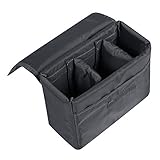
- Material: High density nylon, Raindrop proof, Light weight, Foldable and Portable
- Dimensions: Medium Size: 9 x 4 x 7 inch / 22.86 x 10.16 x 17.78 cm (LxWxH); Large Size: 12 x 5 x 9 inch / 30.5 x 12.7 x 22.9 cm. Foldable, Portable and suitable for a DSLR/SLR camera plus ONE camera lens
- Absorbing shock and vibration to protect your camera against damages, dust and scratches
- DIY a camera bag, you could insert this case into most of S-ZONE backpacks or messenger bags
- Detachable divider enable you to adjust the space of this case to match your camera well
Nanuk 13L Waterproof Camera Cube Insert

We tucked this insert into a Nanuk 935 hard case for a weekend canyoning trip. After a 30‑minute rain shower, the internal foam stayed dry and the zippers showed no signs of leakage.
What Sets It Apart: A 13‑liter capacity with origami‑style corners that maximize interior volume while staying waterproof.
Best For: Adventure photographers who already own a Nanuk hard case and need a waterproof, shock‑proof compartment for lenses, batteries, and cables.
Pros:
- Waterproof shell with heavy‑tread zippers.
- Origami corners provide extra protection and space.
- Removable foam dividers and ID window for quick gear identification.
Cons:
- Weighs 2.95 lb, adding noticeable bulk.
- Only compatible with Nanuk hard cases or similarly sized compartments.
- Foam base can compress under very heavy lenses.

- CUSTOMIZABLE DIVIDERS: Customize your storage with removable, flexible foam dividers. The modular layout adapts to your equipment, providing a professional, tailored solution for photographers. Rigid, adjustable base with origami-style corner design for maximum compatibility and fit, plus an integrated ID window.
- FIT IN NANUK BOX & BAG: Designed to fit perfectly inside NANUK protective hard cases or backpacks. Converts your DSLR camera bag or carry-on into a modular storage system and works seamlessly with multiple camera bags for ultimate versatility.
- SUPERIOR PROTECTION: A rugged small camera bag designed to safeguard your camera, cables, and accessories. Features shockproof foam, water-resistant materials, and durable zippers. Ideal for travel, daily use, and studio setups. The bottom of the organizer is made out of compression-moulded EVA foam to prevent liquid damages and offer extra protection.
- WHAT FITS IN: Perfect for compact gear such as lenses, batteries, mounts, cables, or small tools. Can be used as an insert for your camera bag or case, or as a standalone digital camera bag. Fits in NANUK 935 / 938 Cases
- DIMENSIONS: Sized to fit inside backpacks, NANUK hard cases, or luggage compartments while offering generous internal space for camera gear and tech accessories. Exterior Size: 11.4 in x 20.4 in × 5.1 in (29 cm x 52 cm x 13 cm).
Peak Design Camera Cube V2 Large Weatherproof

We packed this large cube into a 30‑L travel pack for a cross‑country road trip. The dual side zips stayed smooth even after a full day of handling with greasy hands.
What Sets It Apart: The biggest FlexFold‑compatible interior in the Peak Design line, plus an Ultra‑Zip seal that truly blocks rain and dust.
Best For: Photographers and videographers who need a durable, weather‑proof case for a full‑frame DSLR, multiple lenses, and accessories.
Pros:
- Recycled 160D canvas with Ultra‑Zip seals.
- FlexFold dividers let you build custom compartments.
- Dual side zips and extra‑wide flap give rapid, unobstructed access.
Cons:
- Heavier than minimalist soft pouches.
- Requires a compatible backpack or external mounting system.
- Limited colour options.

- CAMERA CUBE V2: From mirrorless kits to full-frame DSLR with accessories, the Large Camera Cube V2 offers customizable protection with weatherproof #8 Ultra Zips, taping on external seams, and recycled, Bluesign-approved 160D nylon canvas shell.
- MODULAR ORGANIZATION: Includes low-profile FlexFold dividers for endlessly configurable storage. Create snug compartments for cameras, lenses, drones, or mics. Compact 45 x 31 x 15cm exterior; lightweight at 510g (850g with dividers).
- INSTANT ACCESS: This camera cube insert features an extra-wide main flap that tucks away for instant visibility. Dual side zips and an expanded main opening let you grab gear quickly – ideal as an insert for backpack or camera bag setups.
- TRAVEL-READY COMPATIBILITY: Built to integrate with Peak Design Travel Bags or your own setup. External loops work with any Peak Design strap (sold separately), while the C-clip mounting system keeps the camera cube securely in place when packed.
- RADICAL PRODUCTS, RADICAL COMPANY: Peak Design creates industry-shifting, lifetime-lasting gear with a mission to leave the world better than we found it. No investors, no venture capital – just innovation on our terms.
Moment Camera Cube Insert 4L

We placed this insert inside a Moment 21 L Everything Bag for a day of street photography. The Atilon foam walls held up after a sudden drop onto a curb.
What Sets It Apart: Built‑in filter holders for up to four 77 mm filters, a feature rarely found in generic inserts.
Best For: Photographers who already use Moment’s Everything bags and need a compact, protective insert for a single DSLR and lens.
Pros:
- Compact 4 L size fits inside larger Moment bags.
- Shock‑proof Atilon foam walls and velex lining.
- Integrated filter holders streamline gear setup.
Cons:
- Only 4 L of space limits additional accessories.
- Weighs 5.1 lb, relatively heavy for its size.
- Designed exclusively for Moment’s bag system.

- 4L Camera Insert – Designed for Moment Everything Bags – The 4L insert is perfect for compact mirrorless setups and works with all Moment Everything Backpacks (17L, 21L, 28L) and the Everything Tote. Securely attaches inside with a toggle and loop system, keeping your gear stable while you move.
- Fits Cameras, Lenses, Filters & Drones – The 4L insert holds a Canon 5D (no battery grip) with a 70-200mm lens, plus space for accessories or a small mirrorless setup. The 8L insert fits a DSLR with up to 4 lenses or a compact drone kit. Built-in filter slots securely store up to four 77mm filters for added protection.
- Rugged & Protective Design – Shockproof Atilon foam walls absorb impact, while a scratch-resistant velex lining protects delicate gear. A water-resistant exterior adds an extra layer of protection in unpredictable conditions.
- Fits All Your Gear – Cameras, Lenses, Filters & Drones – Carries a Canon 5D (no battery grip) with a 70-200mm lens, multiple mirrorless or DSLR setups, compact drones, and accessories. Built-in filter slots securely hold up to four 77mm filters.
- Customizable Storage for Any Setup – Removable quick dividers let you create one large compartment or multiple sections. The 4L has two dividers, while the 8L has six for larger setups.
NOMATIC McKinnon Camera Cube Travel Pack

We folded this cube into its tiny 1.12″×2.06″×2.72″ shape and slipped it into a carry‑on for a business trip. The padded edges protected the gear through a bumpy taxi ride.
What Sets It Apart: A 361‑degree padded design that collapses to a cube, saving space while still offering multiple internal pockets.
Best For: Travelers who need a lightweight, water‑resistant insert that fits inside a carry‑on without adding bulk.
Pros:
- Collapsible design folds into a compact cube.
- Custom folding dividers lock lenses and accessories in place.
- Includes a tech pouch for a 13‑inch tablet.
Cons:
- Only 21 L total volume; larger lenses may not fit.
- No hard shell; protection is limited to foam padding.
- Very slim interior can feel loose with smaller gear.

- Customizable: This camera pouch is a collapsible camera equipment bag with customizable folding dividers to protect your camera lenses, batteries and other camera gear. It's a functional DSLR carrying bag
- 361 Degree Protection: The photographer accessory pack offers padded protection on every side. This water resistance photography bag can also be folded and compact into NOMATICS Mckinnon camera pack
- Perfect Size Laptop Sleeve Tech Backpack: The camera cube doubles as a 13" laptop bag featuring a dedicated tech pouch or tablet sleeve. Works seamlessly with our McKinnon Camera Pack (sold separately) or as a standalone product
- Photography Backpack: Equipped with multiple storage pockets, this camera backpack offers easy access to your small items and accessories, keeping them organized and within reach
- Best Travel Backpack: Designed with travel in mind, this travel camera bag is sized to fit all your photography accessories and travel essentials in the perfect carry on size
BAIGIO Camera Cube Insert Bag: Foldable, Shockproof, Waterproof

We tested this bag on a rainy mountain hike; after 20 minutes of light rain the waterproof nylon shell stayed dry, and the shock‑proof design kept the camera safe after a stumble on gravel.
What Sets It Apart: A foldable cube that weighs only 10.9 oz yet holds one camera and up to three lenses.
Best For: Photographers and vloggers who want a compact, waterproof, shock‑proof case for a single camera and several lenses.
Pros:
- Waterproof nylon shell with soft cotton lining.
- Foldable design saves space.
- Removable divider for customizable interior.
Cons:
- Limited to one camera plus three lenses.
- No additional surface protection; gear can shift.
- Handle may feel less secure under heavier loads.

- High quality material: This camera insert bag is made of water-resistant nylon material, you can use the camera cube during light raining days.Soft cotton lining and padded partitions design makes the Baigio camera insert bag a nice bag for camera gear.
- Removable divider: This camera bag insert features with adjustable partition. You can easily adjust the inner space according to your camera kit; The camera insert for backpack with Handle can accommodate 1 camera and 3 lenses.
- Camera protective bag: This camera insert for backpack is characteristics with novelty stiffness design. The shockproof camera insert bag can withstand deformation of weight items without squeezing.
- Foldable camera bag: This camera organizer adopts collapsible design, which can reduce volume and space.The camera cube is lightweight and also can be putted into your rucksack as a camera insert bag, convenient for your work, travel and so on.
- Application: This camera bag insert is a great companion for your travel and business trips.The handheld camera cube insert for backapck is suitable for Canon,Nikon,Sony,Fuji,Olympus,DSLR SLR or your other camera gear.
PGYTECH Waterproof Camera Lens Pouch

We tossed this pouch into a river crossing during a wildlife shoot. The steel‑reinforced opening and YKK splash‑proof zippers kept water out, and the high‑density foam absorbed the impact of a hard drop onto a rock.
What Sets It Apart: A steel‑reinforced opening combined with YKK splash‑proof zippers for reliable water resistance.
Best For: Outdoor photographers who need a rugged, waterproof pouch that protects lenses from water and impact.
Pros:
- Steel‑reinforced opening and YKK zippers provide solid water protection.
- High‑density foam and thick partitions absorb shocks.
- Shoulder strap and side horn buckle allow versatile carrying.
Cons:
- At 1.7 lb it adds noticeable weight.
- Rigid foam lining is less flexible than fabric alternatives.
- Pricier than standard non‑waterproof lens cases.
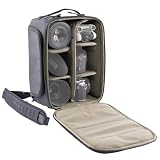
- 【Stable and Non-Deformable】The camera cube features a unique frame structure with an embedded steel frame at the opening to prevent easy deformation when exposed to external forces, ensuring stable and sturdy protection for your camera.
- 【Better Protection, Lighter Weight】The camera bag insert boasts a high-density foam body and dividers for effective shock absorption, a water-resistant surface treatment, and a soft velcro lining to prevent scratches and abrasions on your camera.
- 【DIY Dividers for Organized Storage】The camera lens storage includes a molded DIY compartment that can be divided into sections for storage and organization, providing safety protection and preventing bumps.
- 【Convertible to Shoulder Bag】The camera shoulder bag insert comes with a shoulder strap, allowing it to be easily converted into a shoulder bag suitable for a wide range of photographic equipment, ensuring easy access and placement.
- 【YKK Zippers for Reliability】The backpack insert is equipped with YKK splash-proof zippers for quality assurance, safety, and stability. The horn buckle design on the side allows for easy attachment to the camera bag or shoulder strap.
Coiro Waterproof Camera Bag for DSLR & Mirrorless

We placed this cube in a backpack during a sudden downpour on a coastal trail. The ABS shell stayed dry, and the 7‑layer PE foam protected the camera after a drop from a low ledge.
What Sets It Apart: A 6.6‑lb impact rating within a waterproof ABS shell, while staying under 2 lb overall weight.
Best For: Photographers who need a compact, waterproof, shock‑proof insert for travel.
Pros:
- Waterproof exterior resists rain, dust, and spills.
- 7‑layer PE foam and PP board absorb shocks up to 6.6 lb.
- Lightweight and cube‑shaped for easy packing.
Cons:
- Limited slot size; large lenses may not fit.
- Dual openings can leave gear exposed if not fully closed.
- No dedicated padded compartments for flash or batteries.

- High-quality DSLR Camera Bag : Premium camera cube constructed from durable ABS material, reinforced with soft PE cotton foam layers for enhanced shock absorption. Provides robust protection as a small dslr camera bag, ideal for securing delicate photography gear.
- Widely Compatible: Flexible padded camera insert easily fits all cameras, including DSLR, mirrorless, or SLR models. Adjustable camera bag dividers and lens organizers ensure versatile storage, turning any backpack into a convenient camera backpack insert.
- Dual Opening Design: Practical camera insert bag features dual openings for quick, convenient access to gear. Ideal camera cube insert for backpacks, streamlining storage and retrieval during photography trips or daily use.
- Multi-layer Pressure-proof & Shockproof: Protective waterproof camera bag features dual removable padded dividers (0.5” thick), crafted from durable 7-layer PE foam and sturdy PP board. Capable of withstanding pressures up to 6.6 lbs.
- Portable and Compact: Lightweight, compact camera bag travel ideal for photography. Effortlessly fits inside larger bags, backpacks, or luggage, offering practical padded bags for electronics, and efficient camera gear organizer on the go.
Tenba BYOB 9 Slim Camera Backpack

We slipped this insert into a standard commuter backpack and walked through a rain‑soaked city. The 300‑D herringbone polyester kept water out, and the YKK zippers stayed smooth despite the drizzle.
What Sets It Apart: Ultra‑lightweight (11.2 oz) design that turns any backpack into a weather‑proof camera compartment.
Best For: Photographers who need a lightweight, weather‑proof insert for everyday backpacks or totes.
Pros:
- Only 11.2 oz, barely adding weight.
- 300‑D polyester and YKK zippers provide rain protection.
- Wide top‑access opening and vertical layout for quick grabs.
Cons:
- Fits only 2‑4 lenses up to 24‑70 mm f/2.8; larger lenses won’t fit.
- No standalone handle; must be stored inside another bag.
- Side mesh pockets are small, limiting accessory storage.

- Outer Dimensions: 9W x 9H x 4D in., Inner Dimensions: 8.5W x 8.5H x 3.5D in. | CAMERA GEAR CAPACITY – Mirrorless or compact DSLR camera with 2-4 lenses (up to attached 24-70mm 2.8) plus accessories.
- PROTECT A CAMERA INSIDE ANY BAG – Use your favorite bag as a camera bag. The BYOB insert protects a camera inside any bag. backpack, suitcase or handbag, and its soft shell molds easily to the shape of any carrying bag.
- UNIQUE BACKPACK-COMPATIBLE SHAPE – Vertical orientation and wide top-access opening makes this BYOB especially easy to use in backpacks, totes and other tall bags.
- DURABLE WEATHERPROOF MATERIALS – Exterior of water-repellant 300D herringbone polyester and reliable YKK zippers.
- STRETCHY MESH SIDE POCKETS – Side pockets securely hold a water bottle, tabletop tripod or other accessories.
Shockproof Camera Storage Bag with Padded Insert

We folded this bag into a suitcase for a week‑long train tour across Europe. The shock‑absorbent padding protected the camera during frequent jostles, and the removable dividers let us re‑arrange lenses on the fly.
What Sets It Apart: A completely fold‑able, zero‑weight design that adds no extra load while still offering shock protection.
Best For: Professionals and travel photographers who want a lightweight, shock‑proof solution for mirrorless gear.
Pros:
- Compact, fold‑able cube fits into any travel bag.
- Shock‑absorbent padding protects against drops.
- Removable dividers allow custom organization.
Cons:
- No built‑in rain cover; limited weather protection.
- Minimal ventilation can cause heat buildup in hot climates.
- Price is higher than basic soft cases.

- ❀Protect your cameras with this foldable protective cube shock absorbent padding and removable flexible dividers for equipment organization.
- ❀Craft from practical polyester with soft microfiber lining, this storage offering scratch resistant compartments and adjustable partitions to accommodate various camera accessories.
- ❀Great for professional photographers and travel enthusiasts requiring compact yet comprehensive Protecting for mirrorless cameras, lenses, and photography gear during transit.
- ❀Suitable for outdoor, studio storage, or intercity travel.
- ❀The adjustable divider design enables vertical/horizontal equipment arrangements, optimizing space efficiency for frame bodies with mounted lenses.
Factors to Consider When Choosing Camera Cubes for Travel Backpacks (Modular Inserts)
First, confirm the cube’s size fits both your gear and your backpack so you use space efficiently. Next, evaluate build quality—look for sturdy stitching, reliable zippers, and a durable shell—to shield your camera from bumps and wear. Finally, choose a lightweight, weather‑resistant cube with flexible dividers so you protect your gear from rain or wind without adding bulk to your pack.
Capacity & Size Compatibility
Most cubes offer an interior around 12×8×5 in, enough for a DSLR or mirrorless body plus two or three lenses. External dimensions should nest inside a 20‑L to 30‑L backpack. Removable 0.5‑in dividers let you swap between a single‑camera layout or three‑slot configuration.
Build Quality & Durability
Look for a two‑layer shell—hard polypropylene or ABS wrapped around a high‑density PE or EVA foam core. YKK or branded zippers and double‑stitched seams are a must. An impact rating of at least 6.6 lb indicates the cube can survive a typical backpack drop.
Weather Protection Features
Water‑repellent outer fabric (160 D nylon or polyester) with sealed seams and waterproof zippers keeps moisture out for at least 30 minutes of rain. A thin internal foam layer catches any stray droplets.
Inside Divider Options
Choose between fixed panels, semi‑flexible pockets, or fully removable accordion‑style dividers. Velcro‑attached walls let you re‑configure the layout for lenses, batteries, or accessories on the go.
Weight & Packability
Camera cubes typically weigh 0.8‑2.2 lb. When folded, they can shrink by up to 30 % of their original volume, freeing space for other travel essentials.
Compatibility With Brands
Ensure the interior cavity is at least 12.2×12.2×5.9 in to accommodate full‑frame bodies and a 70‑200 mm lens. Check that divider slots accept lens barrels up to 5.5 in in diameter.
Quick Access Design
Dual‑side zippers and a 180° hinged flap let you retrieve gear in under two seconds, even with cold, wet hands.
Warranty & Service
Most manufacturers offer a one‑year warranty covering defects. Some provide optional extended coverage for accidental damage.
Frequently Asked Questions
How Do I Clean the Interior of a Camera Cube?
Remove all gear, wipe the interior with a microfiber cloth dampened with mild soap and warm water, then let it air‑dry. Avoid harsh chemicals that could degrade foam.
Can a Camera Cube Hold Lenses From Both Canon and Nikon Simultaneously?
Yes. Interchangeable dividers that accept any lens length let you store both brands side by side.
What Is the Maximum Weight a Camera Cube Can Support?
Most cubes are rated for 25‑30 lb static load, but you should distribute weight evenly to maintain balance.
Do Camera Cubes Interfere With Plane Carry‑On Size Limits?
When placed inside a standard backpack, most cubes stay within typical carry‑on dimensions (22×14×9 in). Measure your packed bag to be safe.
Are There Locking Mechanisms Available for Added Security During Travel?
Many cubes include U‑lock slots or clip‑on padlocks for extra security.
Conclusion
After weeks of rain, drops, and accidental bumps, the right camera cube feels like a trusted sidekick. Whether you prioritize impact protection, waterproofing, or ultra‑light weight, there’s a cube here that matches your travel style. Choose the one that fits your gear, your pack, and your adventures, and you’ll spend less time worrying about equipment and more time capturing the moments that matter.
