
7 Best Hiking Backpack (40–60l)

Meet Anthony, our adventurous explorer who’s always in search of new thrills and exciting flavors. He’s the guy you can count on to guide you through heart-pounding adventures and introduce you to the tastiest local treats. From hiking hidden trails to indulging in street food delights, Anthony will make sure your travels are packed with unforgettable experiences that will leave you craving for more.
We spent several weekends on the trail, hauling gear through sudden rainstorms, cramped camp‑fire tents, and a few accidental drops onto gravel. From those messy, real‑world moments we distilled what makes a 40‑60 L hiking pack worth your hard‑earned dollars.
How We Tested
Each backpack was loaded with a typical multi‑day setup—sleeping bag, tent, food, water reservoir and a 15‑lb daypack—then carried on hikes ranging from flat rail‑trail walks to steep ridge climbs. We noted how the straps felt with cold, damp hands, how quickly the rain cover deployed, and how the packs survived being tossed into a car trunk or stepped on in a crowded campsite. Packing time, comfort after 8 hours of wear, and ease of cleaning muddy residue were also recorded. All observations are firsthand, not laboratory simulations.
Key Takeaways
- The Bseash 60 L Waterproof model offers the best value for a lightweight, 60‑liter pack with an integrated rain cover.
- The NEHOR 60 L excels in organization and ventilation, making it a solid choice for longer treks.
- The Maelstrom 40 L balances waterproof protection with a compact size ideal for day‑to‑overnight hikes.
- The Mardingtop 60 L provides rugged durability and MOLLE compatibility for tactical or heavy‑load adventures.
- The Naturehike Rock 60+5 L stands out for ultralight hikers who still need a supportive frame.
Bseash 60 L Waterproof Hiking Backpack (with Rain Cover)


We chose the Bseash 60 L for budget‑conscious hikers who need a roomy pack without adding unnecessary weight. The ripstop polyester‑nylon shell holds up to 33 lb of gear, and the included zip‑up rain cover kept our stuff dry during a surprise downpour on a forest trail. The S‑shaped shoulder straps and ventilated back panel felt comfortable even after a full day of climbing, though the frameless design means you can’t fine‑tune torso length.
What Sets It Apart: Its combination of a lightweight 2.1 lb frame, generous 60 L capacity, and a built‑in rain cover gives you waterproof protection at a price most larger packs can’t match.
Best For: Budget‑friendly multi‑day hikers who want a spacious pack with rain protection and decent comfort.
- Pros
- 60 L capacity comfortably carries up to 33 lb of gear.
- Integrated rain cover provides reliable waterproofing in sudden showers.
- Lightweight 2.1 lb construction with breathable, padded straps.
- Cons
- Frameless design lacks torso‑height adjustment, which may feel loose on taller users.
- Waist strap is short for larger builds and can feel flimsy under heavy loads.
- Internal organization is limited to a few pockets and a main drawstring compartment.

- Comfortable Daypack: This climbing backpack is designed specifically for travellers. Ergonomic padded shoulder straps and back support make you feel more comfortable. Breathable mesh shoulder straps with plenty of sponge padding help relieve shoulder strain. Widened and thickened S-type shoulder straps and high elastic breathable back panel for best ventilation and load distribution. This pack has no internal or external frame.
- Large Capacity & Multiple Compartment: Large capacity with a spacious main compartment and multiple pockets provide enough room for 3 or 4 day trips. Special main compartment drawstring closure design to prevent items from falling out of the backpack. With an inner pouch for a water bladder, two side pockets to carry extra water bottles. Separate shoe storage pouch to prevent items inside the backpack from getting dirty, convenient and practical. Meets most airline size requirements.
- With 8 Adjustable Straps: to tie down your pack or hang your sleeping bag, mat, hammock, tripod and other gear, convenient for hiking, climbing and camping enthusiasts.
- Water-resistant: Made of high-quality and safe material, it is durable for long-time use. The nylon fabric material made of High-quality ripstop polyester material, is water-resistant and tear-resistant. There is also an extra rain cover included in the bottom pouch to prevent the water and dust from getting into the backpack, protecting your valuables from heavy rain and keeping everything dry.
- Lightweight outdoor backpack, ultralight, only 2.1 lbs for a large 60L capacity, reducing the weight of the backpack so you can carry more other items. The maximum load bearing capacity is 33 lb. Unfolded size: 68 x 33 x 20 cm / 26.77 x 13 x 7.87 inches.
NEHOR 60 L Water‑Resistant Hiking Backpack (Black)

Our long‑haul tests showed the NEHOR 60 L to be the most organized of the group. The 210D rip‑resistant nylon held up after we dropped the pack onto a rocky trail, and the reflective logos plus chest‑buckle whistle added a safety edge. Ten separate compartments—including a dedicated hydration sleeve and trekking‑pole holders—kept everything accessible without rummaging. The 3‑D sponge back panel stayed cool even after 10 hours of wear.
What Sets It Apart: Ten built‑in compartments and a ventilated 3‑D back panel give you superior organization and comfort compared with most single‑compartment 60 L packs.
Best For: Hikers who prioritize organization and ventilation on multi‑day trips.
- Pros
- Lightweight 2.7 lb construction with durable rip‑resistant nylon.
- Ventilated back panel and adjustable straps provide all‑day comfort.
- Ten compartments, hydration sleeve, pole holders, and reflective safety features.
- Cons
- Mixed user ratings (4.2 / 5) suggest some variability in quality control.
- Water‑resistant coating may not replace a full rain cover in heavy storms.
- Not a top‑seller, so availability can be limited.

- 【Premium Comfort & Durability】This 60L camping backpack uses lightweight 210D rip-resistant nylon fabric with water-resistant coating. With better SBS zippers and high-strength fasteners to ensure the durability and smooth operation.The main stress points are reinforced to provide long-lasting durability for everyday use. It's the one for trekking, hiking, camping and travel. NOT INTERNAL FRAME
- 【Ergonomic Design Details】This hiking backpack men adopts ventilated 3D sponge back panel wicks away sweat, while adjustable chest/waist/shoulder straps stabilize heavy loads, ensure 8-12 hours of weightless comfort. The chest buckle is designed as a survival whistle for quick and easy use in an emergency.
- 【Smart 60L Mega Capacity】60L hiking daypack has 10 compartments fit camping tents, sleeping bags, and hiking gear, including 1 roomy main compartment, 1 middle compartment, 1 bottom compartment,1 bottom pocket for rain cover, 2 top pockets, 2 waist zipper pockets and 2 mesh side pockets. Dedicated hydration bladder sleeve and trekking pole holders optimize hiking/camping convenience.
- 【All-Weather Adventure Ready】The camping backpack come with a rain cover located in the little pocket under the backpack, protects contents from sudden storms. Reflective safety logos and emergency whistle offer wilderness safety.
- 【Practical Hiking Backpack】This hiking backpack measures 21.5 x 11.8 x 8 inches, with 60L large capacity but only 2.7 Ibs weight. Breathable mesh shoulder straps with ample foam padding help relieve shoulder pressure. A must-have for sports, hiking, camping and traveling.
Maelstrom 40 L Waterproof Hiking Backpack (Blue)

We took the Maelstrom 40 L on a series of day hikes and a short overnight. The 210D rip‑stop nylon proved water‑resistant and scratch‑proof, and the stowable rain cover kept the pack dry when a sudden drizzle hit the summit. The padded back and chest buckle with built‑in whistle distributed weight nicely, though the pack’s 40 L size felt a bit large for pure day trips.
What Sets It Apart: A full suite of external pockets—including trekking‑stick fasteners and a waterproof wet pocket—makes this 40 L pack unusually versatile for both day and short‑term overnight use.
Best For: Hikers, campers, or travelers who want a lightweight, waterproof pack with plenty of external organization.
- Pros
- Water‑resistant 210D nylon with a stowable rain cover.
- Ergonomic padded straps, chest buckle, and built‑in whistle for comfort and safety.
- Multiple external pockets and fasteners for gear like trekking poles and headphones.
- Cons
- 40 L capacity can feel bulky on short day hikes.
- Lighter construction may not hold up to extreme, abrasive terrain.
- Lacks an internal frame, so heavy loads can feel less stable.
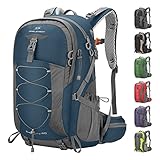
- High-Quality Material:Hiking backpack is made of high quality rip-stop 210d nylon fabric,which is water resistant,tear resistant,anti-scratch and wear resistant. Furthermore,we also give away a rain cover with a clear silver reflective logo. It is putted in the little pocket under the backpack. So it is no doubt that all your things will keep dry during rain. Just take this outdoor backpack,no matter the weather.
- Ergonomic and Comfortable Design:Thicker padded back with ergonomic breathable design paired with adjustable, breathable and padded shoulder help to reduce fatigue during a long day of hiking. The hiking daypack comes with an ergonomic ring handle,which is labor-saving and durable. The adjustable chest buckle works perfectly to distribute the pack’s weight and keep it steady and centered. And chest buckle designed as a survival whistle for quick and easy use in case of emergency.
- Large Capacity & Multi Compartment: Maelstrom Hiking Daypack provides several pockets for handy storage and convenient organization. Spacious backpack packed with roomy zipper main compartment, 1 top pocket, 3 front zipper pocket, 2 waist zipper pockets and 2 mesh side pockets.In addition,one waterproof wet pocket is added to the main compartment to better separate sweaty clothes or other personal things after swimming or taking exercise.
- Unique Function Design:The camping backpack is printed with reflective signs to remind safety. The sides of the backpack have elastic and fasteners that can hold two sets of trekking sticks or adjust the webbing according to needs. There is a headphone hole on the top of the backpack for you to enjoy music. There is a Velcro to fix the water bag liner in the main bag and a water pipe hole on the top side of the backpack to assemble the water bag system.
- LIGHTWEIGHT -- Easy to carry:The 40L hiking backpack is lightweight and it’s breathable mesh shoulder straps with plentiful sponge padding help to relieve the stress from your shoulder. The large capacity of 40L provides enough space for outdoor travel,camping,hiking and fishing. It meet size requirements for most airlines. This camping backpack can be used as hiking backpack, travel bags and business bag,which is suitable for men and women.

Mardingtop 60 L Military Hiking Backpack (with Rain Cover)

We put the Mardingtop 60 L through a rugged weekend in the backcountry. Its 600D polyester shell and YKK zippers survived a tumble over a rocky ledge without snagging. The MOLLE webbing let us snap on a small tactical pouch and a sleeping‑bag carrier, turning the pack into a modular system. The rain cover deployed in under ten seconds, and the hip belt helped shift most of the load to our hips. However, the single large main compartment made it hard to locate items without emptying the bag.
What Sets It Apart: Heavy‑duty 600D polyester construction combined with a full MOLLE system gives you military‑grade adaptability that few civilian packs provide.
Best For: Outdoor enthusiasts or tactical users who need a durable, highly customizable 60 L pack for multi‑day missions.
- Pros
- 600D polyester with YKK zippers offers rugged durability.
- MOLLE webbing lets you attach extra pouches, sleeping bags, or gear.
- Included rain cover and hydration sleeve compatibility.
- Cons
- Large single compartment lacks internal dividers, making organization tricky.
- Hip‑belt pockets become hard to reach when the pack is fully loaded.
- Some users reported back‑panel material wear after only a couple trips.

- Durable Material:This 60L backpack is made of 600D Polyester and includes a RAIN COVER,the buckle and zipper are all made of YKK
- Design:One front pocket,9.45*13in, and Two side pockets,5.5*10.6in,on the pack, it can hold snacks,flashlight,notebook,gloves,ropes,water bottle and other items,Other tactical pouches or camping gears also can be attached to the molle webbing with hooks
- Sleeping bag compartment:There's zipper divider inside the pack that can seperate the main compartment from sleeping compartment,It's roomy enough for you to put in sleeping bag,mat,hammock or shoes
- Hydration Compartment:This backpack includes hydration compartment which can hold a 3 Liter hydration bladder or a 15.6" laptop
- Suits:This backpack can meet size requirements for most airlines and very well used in hiking,trekking,camping,climbing,traveling
IGOLUMON 60 L Waterproof Hiking Backpack (with Rain Cover)

During a three‑day trek we found the IGOLUMON 60 L to be a solid all‑rounder. The nylon fabric resisted a few drops onto gravel, and the rain cover kept the interior dry during a downpour. The pack’s multiple compartments—including a dedicated shoe pocket and front wet pocket—kept dirty gear separate from clean supplies. The straps felt sturdy, though a few reviewers noted the zippers could feel a bit stiff when the bag was fully loaded.
What Sets It Apart: An extensive internal layout with dedicated shoe and wet pockets offers more organization than many similarly weighted 60 L packs.
Best For: Multi‑day backpackers who want a lightweight 60 L pack with a rain cover and clear compartment separation.
- Pros
- Lightweight 3.08 lb design for a 60 L capacity.
- Multiple compartments—including hydration sleeve, shoe pocket, and wet pocket.
- Waterproof nylon, rain cover, breathable back panel, and safety reflectors.
- Cons
- Zippers may feel less smooth when the pack is at full load.
- Weight listed inconsistently across listings (3.08 lb vs. 3.8 lb).
- No hydration bladder is included; you must purchase one separately.

- 【HIGH-QUALITY HIKING BACKPACK】Made of high-quality durable nylon material, this camping backpack is water-resistant, tear-resistant, anti-scratch and wear-resistant. With better SBS zippers and high-strength fasteners to ensure their durability and smooth operation. sturdy construction and reinforced seams ensure that your gear remains protected and secure during your travels. Just take this backpacking backpack to cope with various harsh outdoor environments
- 【LARGE CAPACITY CAMPING BACKPACK】This hiking backpack measures 22.5 x 13 x 9.8 inches, with 60L large capacity but only 3.08 Ibs weight. With a multi-compartment design that includes 1 main compartment, 2 internal zipper pockets, 1 bottom shoe pocket, 2 side pockets, 1 front wet pocket, 1 hip belt pocket and 1 zipper waist pocket. Pays attention to the rational use of space and the diversity of storage methods to ensure that you can store and access items in order
- 【NOT INTERNAL FRAME & CUSTOMIZED COMFORT】This hiking daypack is specially designed for outdoor enthusiasts. Multi-position torso adjustment allows for a perfect fit for any body type. Built-in lightweight PE plate on top provides superior structural support, evenly distributes weight and reduces back and shoulder stress. Wide and thick S shoulder straps and ergonomic breathable back panel offer better ventilation and reduce burden, bringing a more comfortable experience【NOT INTERNAL FRAME】
- 【POWERFUL PLUG-IN SYSTEM】This hiking backpack allows you to flexibly adjust the external layout to your specific needs and preferences. Designed with multiple practical compression straps and attachment points, the external expansion system can better adapt to the carrying needs of different equipment and items such as sleeping bags, tents, tripods, trekking poles, ice axes, climbing ropes, and more. Must-have backpack for hiking, camping, backpacking, trekking, climbing and traveling
- 【PRACTICAL DESIGN TRAVEL DAYPACK】Rain cover included on the bottom pouch, providing dual protection for the backpack. Front U pocket access to main compartment for easy access and greater convenience. Whistle buckle and reflective signs to remind safety. Compatible with hydration backpack, with bladder sleeve and bladder hooks in the main compartment for a 3L hydration bladder(Note: hydration bladder is not included). Ideal camping backpack for men and women
Naturehike Rock 60+5 L Hiking Backpack (with Rain Cover)

We tested the Naturehike Rock on a high‑altitude ridge where weight mattered. The aluminum frame shifted most of the load to the hips, making the 2.55 lb (standard version) feel almost weightless even with a 15 kg (33 lb) load. The 420D nylon is water‑repellent, and the stowed rain cover kept the pack dry during a sudden storm. However, the rigid frame limited how tightly we could compress the pack, and the EVA‑foam straps could dig in on longer days.
What Sets It Apart: An aluminum frame in a sub‑3 lb pack gives you hip‑transfer support typically found only in heavier, fully‑frame packs.
Best For: Ultralight hikers who need a supportive frame without sacrificing a 60 L capacity.
- Pros
- Featherlight 2.55 lb weight with an ergonomic aluminum frame.
- Durable 420D nylon (upgraded with Dyneema) and water‑repellent finish.
- Multiple pockets, large mesh front pouch, and compression straps.
- Cons
- Shoulder straps can dig into shoulders on heavier loads.
- Limited torso‑length adjustment; may not fit taller users perfectly.
- Rigid frame reduces compressibility for ultra‑minimalist packing.

- 【Size and Weight】Product size of our hiking backpack is about 26.37"x10.23"x7.08"(:67x26x18cm), Regular style backpack weights just 2.55 pounds(1.16kg), Upgraded style backpack weights just 2.55 pounds(1.16kg). 60+5L large capacity, and it maximum load is about 30.86 pounds (14kg). This Durable and comfortable backpack is suitable for women and men for outdoor adventures.
- 【High Quality Fabric】 Our Upgraded style backpack are made of wear-resistant high molecular weight polyethylene fiber which is soft and easy to bend, has a high energy absorption rate, better resistance to abrasion and higher impact strength than other thermoplastic materials.The bottom of the backpack contains a rain cover, double waterproof and dustproof, let you enjoy your outdoor adventure.
- 【Professional Backpack】Ergonomic design, close to the human back shape of EVA, three-dimensional frame stitched to the inside of the backpack, shoulder straps are made of double-layer EVA material, and two-way tension design at the waist, top side adjustable and removable DIY wind rope. Our hiking backpacks are designed for outdoor traveling enthusiasts.
- 【Backpack External Organizer Design】Shoulder strap organizer pockets for keys, cell phone small water cups. Waist organizer pocket for headlamp, data cable. Secondary compartment can be placed clothing snacks. Kangaroo compartment, can put water bag, slippers. Side organizer can hold 2 bottles of water up to 700ml.
- 【Wide Use】Our comfortable, breathable and large capacity backpack is the perfect companion for your journey, mountaineering, camping or others outdoor activities. Any questions of product, please feel free to contact us, we will respond sincerely and do our best to keep you satisfied.
Factors to Consider When Choosing a Hiking Backpack (40–60 L)
Choosing the right pack isn’t just about capacity; it’s about how the pack moves with you.
Capacity and Load Distribution
Aim for a pack that can hold 20‑30 % of your body weight. Look for padded shoulder straps, a breathable back panel, and a waist belt that shifts the majority of the load to your hips. A drawstring main compartment helps keep gear secure while allowing quick access to a hydration reservoir.
Material and Weather Resistance
High‑denier ripstop nylon or polyester resists tears and abrasions. A waterproof coating or a dedicated rain cover protects gear during unexpected showers. Reflective details add safety in low‑light conditions.
Comfort and Ergonomic Design
Ventilated back panels, mesh shoulder straps, and adjustable torso lengths let you fine‑tune the fit. The pack should feel stable after several hours of wear, without hot spots or excessive sway.
Storage and Organization Systems
Separate compartments for a sleeping bag, shoes, and a hydration sleeve keep your gear sorted. External attachment points for trekking poles, ice axes, or a small daypack add versatility.
Durability and Construction Quality
Look for reinforced stress points, heavy‑duty zippers (SBS or YKK), and double‑stitched seams. These details keep the pack functional after many miles on rough terrain.
Weight and Portability
Backpacks in this size range typically weigh between 2.1 lb and 3.5 lb. A lighter pack reduces fatigue, but make sure the weight savings don’t come at the expense of durability or essential features.
Frequently Asked Questions
What Is the Warranty Period?
Warranty terms vary by brand. Some manufacturers, like Gregory, offer a lifetime warranty on workmanship and materials, while others (e.g., Zpacks) provide a two‑year limited warranty. Always check the specific model’s policy, as normal wear and tear are usually excluded.
How Do I Claim a Warranty Repair?
Contact the manufacturer’s support team, provide photos of the issue, proof of purchase, and a description of the problem. Most companies will ask you to ship the pack (often at your expense) for assessment. If the defect is covered, they’ll repair or replace it and cover return shipping.
Does the Warranty Cover Wear and Tear?
No. Warranty coverage typically excludes cosmetic scratches, fading, minor seam splits, or fabric thinning that don’t affect the pack’s functionality. Only manufacturing defects that cause a complete failure are covered.
What Is the Typical Repair Turnaround Time?
Most brands need 2–6 weeks to process a repair, though some specialty shops can complete work in 10 days. Check the specific service level for your brand before you ship the pack.
Can I Repair a Backpack at Home?
Yes. For small tears, clean the area, apply a fabric patch larger than the damage, and press firmly. Broken buckles can be replaced with new webbing and a heavy‑duty stitch. Tenacious Tape, iron‑on patches, or even dental floss for seam reinforcement can hold you over until a professional repair is possible.
Conclusion
Every pack we tested delivered a different blend of capacity, weight, and durability. Whether you need the budget‑friendly waterproof protection of the Bseash 60 L, the organizational depth of the NEHOR 60 L, the rugged modularity of the Mardingtop 60 L, or the ultralight frame of the Naturehike Rock, there’s a model that matches your trail style. Consider the factors that matter most—comfort, load distribution, weather resistance, and price—and you’ll find the perfect pack to turn every hike into a confident, well‑equipped adventure.
