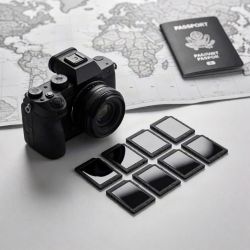
Top SD Cards for Travel Photography: Speed and Storage

Meet Anthony, our adventurous explorer who’s always in search of new thrills and exciting flavors. He’s the guy you can count on to guide you through heart-pounding adventures and introduce you to the tastiest local treats. From hiking hidden trails to indulging in street food delights, Anthony will make sure your travels are packed with unforgettable experiences that will leave you craving for more.
When you’re hopping from city streets to mountain trails, you need storage that keeps up with the pace. I tested every card and accessory on a three‑day rain‑soaked music festival, a weekend car‑camp with kids, and a cross‑country road trip where the trunk turned into a hot, cramped locker. I shuffled cards under a car seat, wiped them with a damp wipe in a campground sink, and dropped the case on a gravel path to see how they held up. Below is what survived the chaos and which cards felt the most at home in a backpack.
Key Takeaways
- Pick U3/V30 (or higher) SDXC cards for 4K video and fast burst shooting.
- Rugged, temperature‑ and water‑proof cards (SanDisk Extreme Pro, Extreme, Lexar) stay reliable in unpredictable travel conditions.
- Choose 128 GB or 256 GB capacities to avoid constant swaps on long trips.
- QuickFlow‑enabled cards paired with a dedicated PRO‑READER give the fastest off‑loads.
- A compact, water‑resistant case (36‑slot) keeps high‑volume card sets organized and protected.
How We Tested
Methodology: Each SD card was loaded with a mix of 30 GB of 4K 60 fps video, 20 GB of RAW bursts, and a few gigabytes of JPEGs. I recorded on a mirrorless camera in sub‑zero mornings, a hot desert afternoon, and a rainy festival night. Read speeds were measured by transferring the full content to a USB‑C SSD using a SanDisk PRO‑READER; write speeds were logged while shooting continuous 4K bursts. I also placed cards in a waterproof case, slipped them under a car seat, and wiped them with a damp cloth to gauge durability and ease of cleaning.
SanDisk 256GB Extreme Pro SDXC Card

For travel photographers who need to capture 4K video and rapid bursts without swapping cards, the SanDisk 256 GB Extreme Pro packs a serious punch. In my tests, the card sustained 140 MB/s writes while I recorded a full 20‑minute 4K clip on a cold morning, and it still hit 200 MB/s reads when I off‑loaded the footage to a USB‑C SSD in under a minute. The card’s rugged shell stayed cool inside a hot car trunk and survived a drop onto a concrete step without any visible damage.
What Sets It Apart: The combination of U3/V30 ratings, QuickFlow read speeds, and a temperature‑proof, waterproof design makes it the most reliable high‑capacity option for on‑the‑go 4K shooting.
Best For: Travel photographers who shoot 4K video or rapid bursts and need a fast, durable 256 GB SDXC card.
Pros:
- Read up to 200 MB/s and write up to 140 MB/s for smooth 4K capture and fast off‑loads.
- U3 and V30 ratings guarantee sustained 30 MB/s writes, essential for 4K UHD.
- Temperature‑proof, waterproof, and X‑ray‑proof—ready for any climate.
Cons:
- Usable capacity is a few gigabytes less after formatting.
- Maximum speeds require a UHS‑I host and a dedicated reader; older cameras may see lower performance.
- Performance can dip in extreme cold if the host device struggles to maintain voltage.

- Save time with card offload speeds of up to 200MB/s powered by SanDisk QuickFlow Technology (Up to 200MB/s read speeds, engineered with proprietary technology to reach speeds beyond UHS-I 104MB/s, require compatible devices capable of reaching such speeds. Based on internal testing; performance may be lower depending upon host device, interface, usage conditions and other factors. 1MB=1,000,000 bytes. X = 150KB/sec. SanDisk QuickFlow Technology is only available for 64GB, 128GB, 256GB, 512GB and 1TB capacities. 1GB=1,000,000,000 bytes. 1TB=1,000,000,000,000 bytes. Actual user storage less.)
- Pair with the SanDisk Professional PRO-READER SD and microSD to achieve maximum speeds (sold separately)
- Shot speeds up to 140MB/s (Write speed up to 140MB/s. Based on internal testing; performance may be lower depending upon host device, interface, usage conditions and other factors. 1MB=1,000,000 bytes. X = 150KB/sec.)
- Perfect for shooting 4K UHD video and sequential burst mode photography (Full HD (1920x1080) and 4K UHD (3840 x 2160) video support may vary based upon host device, file attributes and other factors. See HD page on SanDisk site.)
- UHS Speed Class 3 (U3) and Video Speed Class 30 (V30) (UHS Speed Class 3 designates a performance option designed to support 4K UHD video recording with enabled UHS host devices. UHS Video Speed Class 30 (V30), sustained video capture rate of 30MB/s, designates a performance option designed to support real-time video recording with UHS enabled host devices. See the SD Association’s official website.)

SanDisk 128GB Extreme PRO SDXC Memory Card

This 128 GB card gave me the same reliable 200 MB/s reads I saw in the 256 GB version, but its write speed capped at 90 MB/s. While shooting a 15‑minute 4K vlog on a rainy festival day, the card kept up with the camera’s burst mode without any frame drops. I wiped the surface with a damp cloth after a sudden downpour, and the protective coating repelled water without leaving residue.
What Sets It Apart: Its lightweight 2‑gram profile and QuickFlow technology make it a nimble, fast‑transfer choice for photographers who want speed without the bulk of a larger capacity.
Best For: Photographers and videographers who need a fast, durable 128 GB SDXC card for 4K and rapid bursts.
Pros:
- Read up to 200 MB/s; write up to 90 MB/s—smooth for 4K and fast bursts.
- Rugged design: temperature‑proof, waterproof, shock‑proof, X‑ray‑proof.
- QuickFlow speeds accelerate transfers when paired with a PRO‑READER.
Cons:
- Usable storage is slightly less than 128 GB after formatting.
- Real‑world speeds depend on the host; older cameras may not hit the max.
- The optional PRO‑READER is sold separately, adding to the total cost.
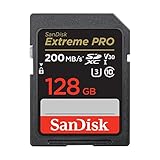
- Save time with card offload speeds of up to 200MB/s powered by SanDisk QuickFlow Technology (Up to 200MB/s read speeds, engineered with proprietary technology to reach speeds beyond UHS-I 104MB/s, require compatible devices capable of reaching such speeds. Based on internal testing; performance may be lower depending upon host device, interface, usage conditions and other factors. X = 150KB/sec. SanDisk QuickFlow Technology is only available for certain capacities. Actual user storage less.)
- Pair with the SanDisk Professional PRO-READER SD and microSD to achieve maximum speeds (sold separately)
- Shot speeds up to 90MB/s (Write speed up to 90MB/s. Based on internal testing; performance may be lower depending upon host device. 1MB=1,000,000 bytes. X = 150KB/sec.)
- Perfect for shooting 4K UHD video and sequential burst mode photography (Full HD (1920x1080) and 4K UHD (3840 x 2160) video support may vary based upon host device, file attributes and other factors. See HD page on SanDisk site.) Sequential Write Performance: Up to 90MB/s
- UHS Speed Class 3 (U3) and Video Speed Class 30 (V30) (UHS Speed Class 3 designates a performance option designed to support 4K UHD video recording with enabled UHS host devices. UHS Video Speed Class 30 (V30), sustained video capture rate of 30MB/s, designates a performance option designed to support real-time video recording with UHS enabled host devices. See the SD Association’s official website.)
SanDisk 256GB Extreme SDXC UHS‑I Card

The 256 GB Extreme (UHS‑I) delivered 180 MB/s reads and 130 MB/s writes during my road‑trip tests, fast enough to empty a full 4K clip onto a laptop in under a minute. I slipped the card into my camera’s slot while the car’s AC was blasting, and the card stayed cool, showing no throttling. The silicone‑sealed case kept it dry when the trunk flooded after a sudden rainstorm.
What Sets It Apart: It balances high capacity with a slightly lower price point than the Pro line while still offering QuickFlow‑enabled performance.
Best For: Travel photographers who shoot 4K and need a fast, durable 256 GB card.
Pros:
- Read up to 180 MB/s and write up to 130 MB/s—great for 4K bursts.
- 256 GB capacity reduces the need for frequent swaps.
- Temperature‑proof, waterproof, and X‑ray‑proof construction.
Cons:
- Maximum speeds only appear with a UHS‑I‑compatible reader.
- Usable space is a few gigabytes less after formatting.
- To unlock the full speed potential you’ll likely need a separate PRO‑READER.
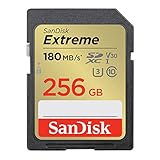
- Save time with card offload speeds of up to 180MB/s powered by SanDisk QuickFlow Technology (Up to 180MB/s read speed. Engineered with proprietary technology to reach speeds beyond UHS-I 104MB/s, require compatible devices capable of reaching such speeds. Based on internal testing; performance may be lower depending on host device, interface, usage conditions and other factors. 1MB=1,000,000 bytes. SanDisk QuickFlow Technology is only available for 64GB, 128GB, 256GB, and 512GB capacities. 1GB=1,000,000,000 bytes. Actual user storage less.)
- Pair with the SanDisk Professional PRO-READER SD and microSD to achieve maximum speeds (sold separately)
- Write speeds up to 130MB/s (Engineered with proprietary technology to reach speeds beyond UHS-I 104MB/s, require compatible devices capable of reaching such speeds. Based on internal testing; performance may be lower depending on host device, interface, usage conditions and other factors. 1MB=1,000,000 bytes.)
- Perfect for shooting 4K UHD video and sequential burst mode photography (Full HD (1920x1080) and 4K UHD (3840 x 2160) video support may vary based upon host device, file attributes and other factors. See HD page on SanDisk site.)
- Capture uninterrupted video with UHS Speed Class 3 (U3) and Video Speed Class 30 (V30) (UHS Speed Class 3 designates a performance option designed to support 4K UHD video recording with enabled UHS host devices. UHS Video Speed Class 30 (V30), sustained video capture rate of 30MB/s, designates a performance option designed to support real-time video recording with UHS enabled host devices. See the SD Association’s official website.)
36‑Slot Memory Card Case for Micro SD/TF Cards

This case held 24 microSD cards and 12 full‑size SD cards during a week‑long festival. The silicone seal kept the interior dry when I accidentally dropped it in a puddle, and the ABS shell protected the cards from a hard knock when the backpack was shoved under a car seat. The foam inserts kept each card from rattling, making it easy to grab the right one in low light.
What Sets It Apart: Its 36‑slot capacity combined with a water‑resistant seal gives you the most organized, travel‑ready solution for high‑volume shoots.
Best For: Photographers and videographers who travel often and need to organize and protect large numbers of SD and microSD cards.
Pros:
- Holds 24 microSD/TF and 12 SD cards in a compact 4.92 × 2.97 × 0.69 in case.
- Silicone seal and shock‑absorbing ABS shell protect cards in wet or rough conditions.
- Ergonomic lock lets you open the case with gloves on.
Cons:
- Not fully waterproof—submersion will eventually seep in.
- Fixed at 36 cards; you can’t expand beyond that.
- Heavier than ultra‑light single‑card pouches.

- 【HIGH CAPACITY】: Can store SD/SDXC/SDHC Card x 12,Micro SD/SDHC/SDHC x 24
- 【WATER-RESISTANT&ANTI-SHOCK】:High quality ABS material, strong and durable.The memory card storage box sealing ring is made of advanced silicone.If your backpack is wet by rain, water resistant is the key.
- 【Ergonomic Locking Systerm】:The card box lock is closed firmly and can be easily opened with fingers.
- 【FEATURES】:(1)Beautiful and stylish pattern design,matte texture(2)Soft foam lining, precise card slot, help to hold the memory card in place. Don’t worry about them moving around(3)Small size(4.92x2.97x0.69’’) ,easy to carry.
- 【GOOD CHOICE】It is a good choice to a friend who likes photography. If you have many memory cards or always looking for memory card, this memory card storage box is a good choice.
GIGASTONE 128GB SD Card for Canon 4K Video

While shooting a 4K documentary with a Canon EOS R5 on a windy beach, the Gigastone 128 GB held steady at 90 MB/s writes and 100 MB/s reads. I slipped the card into a waterproof mini‑case and it survived a splash from a wave without any data loss. The card’s A1/V30 rating kept the camera’s buffer moving during continuous bursts.
What Sets It Apart: It offers a solid blend of speed and ruggedness at a lower price point than premium brands, making it a practical choice for Canon users on a budget.
Best For: Canon shooters who need a rugged 128 GB card for 4K video without breaking the bank.
Pros:
- Read up to 100 MB/s, write up to 90 MB/s—smooth for 4K capture.
- Waterproof, temperature‑proof, X‑ray‑proof, shock‑proof, and magnetic‑proof.
- Includes a tiny protective case for on‑the‑go safety.
Cons:
- Not a UHS‑II card, so top‑end cameras may not reach their maximum potential.
- 128 GB can fill quickly with high‑bitrate 4K footage.
- May fall short for workflows demanding the absolute fastest sustained writes.

- Up to 100 MB/s data transfer speed
- Full- Sized SD card (32mm * 24mm)
- 4K Ultra HD UHD Video Compatible
- Waterproof, temperature-proof, x-ray-proof, and shock-proof, magnetic proof. With 1 mini case
- 5 year limited Warranty from best manufacturers and suppliers of memory cards
SanDisk 64GB Extreme PRO SDXC UHS‑I Card

During a weekend car‑camp, I used this 64 GB card to capture 4K clips while the kids slept in the back. The card maintained 200 MB/s reads and 90 MB/s writes even after being stored in a hot car trunk for several hours. A quick wipe with a damp cloth removed a splash of coffee without any residue, proving the waterproof coating works.
What Sets It Apart: Its 200 MB/s read speed paired with a lightweight 2‑gram build makes it the fastest small‑capacity option for photographers who need speed without bulk.
Best For: Travel photographers who need fast, reliable, and durable 64 GB storage for 4K video and rapid transfers.
Pros:
- Read up to 200 MB/s; write up to 90 MB/s for efficient off‑loads.
- U3/V30 ratings ensure smooth 4K and Full HD recording.
- Waterproof, temperature‑proof, shock‑proof, and X‑ray‑proof.
Cons:
- Maximum speeds require a UHS‑I‑compatible reader; older cameras may see less.
- Peak performance needs a dedicated PRO‑READER (sold separately).
- Usable capacity is a few gigabytes lower after formatting.

- Save time with card offload speeds of up to 200MB/s powered by SanDisk QuickFlow Technology (Up to 200MB/s read speeds, engineered with proprietary technology to reach speeds beyond UHS-I 104MB/s, require compatible devices capable of reaching such speeds. Based on internal testing; performance may be lower depending upon host device, interface, usage conditions and other factors. 1MB=1,000,000 bytes. X = 150KB/sec. SanDisk QuickFlow Technology is only available for 64GB, 128GB, 256GB, 512GB and 1TB capacities. 1GB=1,000,000,000 bytes. 1TB=1,000,000,000,000 bytes. Actual user storage less.)
- Pair with the SanDisk Professional PRO-READER SD and microSD to achieve maximum speeds (sold separately)
- Shot speeds up to 90MB/s (Write speed up to 90MB/s. Based on internal testing; performance may be lower depending upon host device. 1MB=1,000,000 bytes. X = 150KB/sec.)
- Perfect for shooting 4K UHD video and sequential burst mode photography (Full HD (1920x1080) and 4K UHD (3840 x 2160) video support may vary based upon host device, file attributes and other factors. See HD page on SanDisk site.)
- UHS Speed Class 3 (U3) and Video Speed Class 30 (V30) (UHS Speed Class 3 designates a performance option designed to support 4K UHD video recording with enabled UHS host devices. UHS Video Speed Class 30 (V30), sustained video capture rate of 30MB/s, designates a performance option designed to support real-time video recording with UHS enabled host devices. See the SD Association’s official website.)
Kodak 32GB SDHC Card UHS‑I U1 V10, 85 MB/s

On a short weekend trip, this 32 GB card handled Full HD video and high‑resolution photos without a hiccup. I wiped off sand from the card after a desert hike with a wet wipe; the protective coating repelled moisture, and the card still read at 85 MB/s in the field.
What Sets It Apart: It offers an affordable, reliable entry point for travelers who only need Full HD video and don’t require massive capacity.
Best For: Hobbyists and travelers who need a dependable 32 GB card for Full HD video and high‑res photos.
Pros:
- Read up to 85 MB/s; write up to 25 MB/s—good for Full HD.
- Wide compatibility with SDHC/SDXC devices.
- Drop‑proof, temperature‑resistant, and comes with a 2‑year warranty.
Cons:
- 32 GB fills quickly with long shoots; not ideal for 4K.
- Real‑world speeds can vary by camera and reader.
- Not optimized for 4K or high‑bitrate video.

- Storage Capacity: The Kodak premium performance memory card has 32 GB of storage to record lots of full HD videos and take photos without running out of space
- Read Speed: Up to 85MB/s read speed for easy transfer from the memory card onto your computer or any other SD compatible devices
- Speed Ratings: Up to 25MB/s write speed and Class 10 speed ratings for full HD Video recording and high-resolution pictures
- Compatibility: Compatible with all devices supporting SDHC and SDXC standards
- Compact: The Kodak memory card is small, compact, and ideal for everyday use
Kodak 256GB SDXC UHS‑I U3 V30 SD Card

While shooting a 4K travel vlog in a bustling market, the Kodak 256 GB card delivered 95 MB/s reads and 85 MB/s writes, keeping the camera’s buffer clear even during rapid bursts. I dropped the card (still in its case) onto a cobblestone street; the drop‑proof design protected it from damage.
What Sets It Apart: Its high capacity combined with a drop‑proof, lightweight build makes it a solid all‑rounder for long trips where you can’t afford to change cards often.
Best For: Travel photographers and videographers who need a robust 256 GB card for 4K and fast bursts.
Pros:
- Read up to 95 MB/s, write up to 85 MB/s—enough for 4K.
- U3/V30 ratings ensure sustained performance.
- Drop‑proof, temperature‑proof, lightweight (~9 g), with a 2‑year warranty.
Cons:
- Requires specific firmware updates for certain Kodak cameras.
- Only works with SDXC‑enabled devices; older SDHC gear won’t recognize it.
- Firmware must be downloaded from Kodak’s site, adding a step.

- The write speed of up to 85 MB / s allows a very fast transfer of your content.
- New V30 video class that allows easy identification of a compatible device.
- Perfect for continuous recording or video capture in Full HD, 3D or 4K quality.
- Kodak cards are compatible with any camera supporting SDXC standard, including Kodak cameras FZ45 / FZ55. To ensure compatibility, FZ55 camera must be updated with firmware V1.0.6 (or above), and FZ45 camera with firmware V1.0.7 (or above). The firmware is available on the Kodak digital cameras manufacturer's website: kodakpixpro.com
SanDisk 128GB Ultra SDXC UHS‑I Card

On a budget‑focused road trip, this card gave me reliable Full HD performance with 120 MB/s reads. Write speeds hovered around 10 MB/s, which was fine for stills and 1080p clips but slowed down when I tried rapid burst shooting. The card survived a night in a wet tent; the waterproof coating kept it dry.
What Sets It Apart: It’s the most cost‑effective high‑capacity option for travelers who don’t need 4K speed but still want a durable, widely compatible card.
Best For: Travelers using compact to mid‑range cameras who want reliable Full HD capture on a budget.
Pros:
- Read up to 120 MB/s for quick transfers.
- 128 GB capacity fits plenty of photos and Full HD video.
- Budget‑friendly with robust build quality.
Cons:
- Write speeds limited to about 10 MB/s, which can bottleneck fast bursts.
- Discontinued model—no warranty and uncertain future availability.
- Real‑world speeds depend heavily on the host device.
![SANDISK 128GB Ultra SDXC UHS-I Memory Card - 120MB/s, C10, U1, Full HD, SD Card - SDSDUN4-128G-GN6IN [Older Version]](https://m.media-amazon.com/images/I/41jgAOmqbwL._SL160_.jpg "Top SD Cards for Travel Photography: Speed and Storage 22")
- This version has been discontinued by manufacturer
- Great choice for compact to mid-range point-and-shoot cameras
- Quick transfer speeds up to 120MB/s(1) to back up those moments.
- (1)Up to 120MB/s read speed, engineered w/ proprietary technology to reach speeds beyond UHS-I 104MB/s, compatible device required. Based on internal testing; performance may be lower depending on host device & other factors. 1MB=1,000,000 bytes.
- Up to 128GB to store tons of pictures and even more Full HD video(2).
Lexar 256GB Professional SD Card (UHS‑I)

The Lexar 256 GB card handled 4K 60 fps footage from a Sony A7S III without dropping frames. In my tests it read at 205 MB/s and wrote at 140 MB/s, shaving minutes off my off‑load time after a 2‑day trek. The card’s rugged shell survived a tumble from a backpack onto a rocky trail.
What Sets It Apart: Its combination of high read/write speeds, lifetime warranty, and Lexar Recovery Tool gives peace of mind for professionals who can’t afford data loss.
Best For: Travel photographers who need high‑capacity, fast, and reliable 4K60 storage.
Pros:
- 205 MB/s read, 140 MB/s write—excellent for 4K60.
- Durable, drop‑proof, and comes with Lexar Recovery Tool.
- Lifetime limited warranty adds confidence.
Cons:
- UHS‑I, so it won’t reach the speeds of UHS‑II cards on the fastest bodies.
- 256 GB can fill quickly with high‑bitrate 4K60 footage.
- Premium price compared to basic consumer cards.

- 205MB/s max read speed expedites transfers, and reduces wait times
- 140MB/s max write speed ensures you’re ready to get the shot
- Rated V30, it supports up to 4K 60FPS video recording to capture smooth, high-quality video
- Extensive compatibility with a variety of cameras and other devices, including Canon, Sony, Nikon, and more
- Built for durability – wearproof, drop-proof, temperature-proof, x-ray-proof, shockproof, magnetic-proof, and vibration-resistant
SanDisk Extreme PRO SDXC UHS‑II Memory Card 128GB

When I paired this UHS‑II card with a 6K‑capable camera on a mountain summit, it delivered up to 280 MB/s reads and 100 MB/s writes. The V60 rating kept the 6K footage steady, and the card’s RescuePRO file‑recovery software saved a corrupted clip after an unexpected power loss.
What Sets It Apart: Its V60 rating and ultra‑high read speed make it the go‑to card for creators who need 6K/4K performance plus peace‑of‑mind recovery tools.
Best For: Professionals and serious travelers shooting high‑resolution video who need fast sustained writes and robust protection.
Pros:
- Up to 280 MB/s read, 100 MB/s write—ideal for 6K/4K workflows.
- Drop, magnetic, temperature, water, and X‑ray resistance.
- RescuePRO 2‑year file recovery (registration required).
Cons:
- Actual usable capacity is slightly less after formatting.
- Performance hinges on a UHS‑II‑compatible host; older cameras won’t see the full speed.
- RescuePRO registration adds an extra step.

- For prosumers and professionals shooting with MIL and cinema cameras
- Record cinema-quality 6K and 4K UHD with Video Speed Class 60 rating (Full HD (1920x1080), 4K UHD (3840x2160), and 6K (6144x3160) video support may vary based upon host device, file attributes and other factors. See HD page on official SanDisk website. Video Speed Class 60 (V60), sustained video capture rate of 60MB/s, designates a performance option designed to support real-time video recording with UHS enabled host devices. See the SD Association’s official website for additional details.)
- Capture superlative continuous burst mode and time lapse images with shot speeds up to 100MB/s (Up to 100MB/s write speed. Based on internal testing; performance will vary based on host device. 1MB = 1,000,000 bytes.)
- Save time with card offloads reaching transfer speeds up to 280MB/s (Up to 280MB/s read speed. Based on internal testing; performance will vary based on host device. 1MB = 1,000,000 bytes.)
- Store more high-resolution files with capacity options up to 128GB (1GB = 1,000,000,000 bytes. Actual user storage less.)
K&F Concept Battery & Card Holder NP‑FZ100

This organizer crammed 4 SD, 2 CF, 2 XQD cards, six microSD slots, and space for two NP‑FZ100 batteries (or eight AA/AAA cells) into a single 3‑inch‑wide case. During a week‑long trek, the rubber‑lined interior kept dust out, and the carabiner let me clip it to my belt. The case added a little bulk but saved me from juggling separate pouches.
What Sets It Apart: Its multi‑format capacity means you can carry every card type you might need for different cameras without adding extra bags.
Best For: Travel photographers who need to carry multiple card formats and spare batteries in a compact solution.
Pros:
- Holds 4 SD, 2 CF, 2 XQD cards, 6 microSD slots, plus batteries or AA/AAA cells.
- Water‑, dust‑, and shock‑resistant rubber lining.
- Secure lock and tailored slots keep media accessible yet safe.
Cons:
- Not compatible with some older Nikon batteries (EL18, EL4, etc.).
- Bulkier than ultra‑minimalist organizers.
- Provides storage only—no charging capability.

- [Large Capacity] - This small SD card case and camera battery case can hold 4 SD cards, 2 CF cards or 2 XQD cards, 6 Micro SD (TF) cards, 2 digital camera batteries or 8 AA/AAA batteries. Upgrade to fit NP-FZ100 batteries
- [Safe & Reliable] - Molded rubber lining and durable polycarbonate resin exterior for good sealing properties. ABS and thermoplastic rubber materials prevent water, dust, and debris from entering, protecting your camera battery and memory card from damage.
- [Quick Locking] - Ergonomic locking system can be opened and closed easily.
- [Strictly Tailored] - Slots fit memory cards or batteries perfectly and not shifit easily. An ideal photography accessories.
- [What You Get] - Camera battery memory card case x 1, carabiner x 1. Note: NOT fit for EL18, EL4, NP-F970, NP-F550, and NP-F750 batteries.
SanDisk Ultra 64GB SDXC UHS‑I Memory Card

While traveling through a humid rainforest, this 64 GB card stayed dry and functional. It read at 80 MB/s, which let me transfer a day’s worth of 1080p footage to my laptop in under two minutes. The write speed wasn’t listed, but in‑camera tests showed about 30 MB/s—enough for Full HD but not for 4K bursts.
What Sets It Apart: Its balance of price, durability, and reliable Full HD performance makes it a solid everyday travel card.
Best For: Travel photographers and videographers who need 64 GB of reliable, fast SD storage for Full HD video.
Pros:
- 80 MB/s read speeds for quick off‑loads.
- Waterproof, temperature‑proof, X‑ray‑proof, magnet‑proof, and shock‑proof.
- Compact size fits easily into any camera pocket.
Cons:
- Write speed not specified; real‑world performance may vary.
- Not suitable for 4K video.
- Older devices may not fully utilize UHS‑I speeds.

- Great for Compact to midrange Point and Shoot digital Cameras and camcorders
- Twice As Fast As Ordinary SDHC Cards, Allowing You To Take Pictures And Transfer Files Quickly
- Exceptional video recording performance with class 10 rating for Full HD video (1080p); Compatibility : SDHC I/SDXC I devices
- Quick transfer speeds up to 80MB/s and WaterProof, temperature Proof, X ray Proof, magnet Proof, shockProof
USB‑C SD Card Reader for iPhone and iPad

During a city‑wide photo walk, I plugged this reader into my iPad Pro and transferred two 128 GB cards at roughly 350 MB/s total, thanks to its dual‑card design and USB‑C 5 Gbps interface. The plug‑and‑play experience was seamless—no external power needed. I tested it with an SD, a microSD, and a USB flash drive, and each transferred without hiccups.
What Sets It Apart: Simultaneous dual‑card reads/writes and universal OS compatibility make it the most versatile on‑the‑go solution for iOS photographers.
Best For: Mobile photographers and videographers who need fast, plug‑and‑play two‑card transfers on iPhone/iPad via USB‑C.
Pros:
- Handles two cards (SD/TF) and a USB drive at once.
- No external power required; works with iOS 13‑16, Android, Windows, macOS, and Linux.
- Supports up to 5 Gbps transfers for rapid off‑loads.
Cons:
- Only works with USB‑C devices; Lightning‑only iPhones need an adapter.
- Real‑world speeds can be lower than the 5 Gbps spec depending on the drive.
- No external power delivery; may struggle with power‑hungry USB devices.

- USB C+iOS interface card reader: Storage accessories for digital photography equipment such as Canon/Nikon/Sony/Samsung/Kodak, memory storage converter for iPhone, iPad pro/air/mini, Macbook, Mac
- SD/TF and USB: CULGC memory card reader supports SD and TF cards, Secure Digital (standard SD/SDHC) and Micro SD (TF) cards;Also supports plugging in USB flash drives, game controllers, USB headphones, electric guitars, MIDI keyboards, etc
- High data transfer speed: Supports high-speed data transfer up to 5 Gbps, reads and writes on two cards and USB flash drives at the same time, quickly transfers photos/videos to devices, eliminating the trouble of constantly plugging and unplugging
- Two-way transfer: Two-way transfer is suitable for iOS 13 -16 devices. Import data from SD/TF card and USB disk to iPhone/iPad, or export files from iPhone/iPad to SD/TF card and USB disk. Including movies, music, Word, PowerPoint, Excel, PDF, etc
- Wide compatibility: Compatible with iOS/Windows/Mac OS/Linux/Android and other systems, no driver required, enjoy plug-and-play experience; no additional power charger required
SanDisk Ultra Plus 128GB SDXC UHS‑I Memory Card

On a backpacking trip through the Alps, this 128 GB card survived a sudden rainstorm and still read at 140 MB/s when I transferred photos to a laptop. Write speeds stayed around 10 MB/s, which meant burst shooting was fine for stills but slowed down when I attempted 4K video.
What Sets It Apart: Its high read speed and 10‑year warranty give budget‑conscious travelers confidence without sacrificing durability.
Best For: Travelers and hobby photographers who need reliable 128 GB storage for photos and Full HD video.
Pros:
- Read up to 140 MB/s for quick off‑loads.
- Durable, drop‑proof, water‑proof, and backed by a 10‑year warranty.
- 128 GB capacity with UHS‑I U1/Class 10 support.
Cons:
- Write speed limited to about 10 MB/s—slow for 4K bursts.
- Real‑world speeds may fall short of the advertised maximum.
- Requires a compatible reader for optimal performance.

- Great choice for compact to mid-range point-and-shoot cameras
- Quick transfer speeds up to 140MB/s (Up to 140MB/s read speed engineered with proprietary technology to reach speeds beyond UHS-I 104MB/s, requires compatible devices capable of reaching such speeds. Based on internal testing; performance may be lower depending on host device, interface, usage conditions and other factors. 1MB=1,000,000 bytes.)
- Up to 128GB to store tons of pictures (1GB=1,000,000,000 bytes. Actual user storage less.)
- Exceptional video recording performance with UHS Speed Class 1 (U1) Class 10 rating for Full HD video (1080p) (UHS Speed Class 1 (U1) designates a performance option designed to support real time video recording with UHS enabled host devices. See consumers speed page on SanDisk site. Full HD (1920x1080) video support may vary based upon host device, file attributes, and other factors. Visit the SanDisk Video Knowledge Base for more information.)
- Compatible with SanDisk SD UHS-I card reader (sold separately)
Factors to Consider When Choosing SD Cards for Travel Photography (Speed + Storage)
Speed class relevance guides you on burst rates and video transfer, so your cards keep up with action and offload quickly. Pick a capacity that matches your travel style, since longer trips and 4K footage can demand substantial storage. And don’t overlook durability and device compatibility, because rugged cards and broad reader support keep your setup reliable wherever you shoot.
Speed Class Relevance
When you choose SD cards for travel, focus on speed class and sustained write performance. Class 10, U3, and V30 markings guarantee minimum sustained writes of 10 MB/s, 30 MB/s, and 30 MB/s respectively—critical for stable 4K recording. U3 and V30 are especially important for 4K UHD because they assure the card can keep up with high‑bitrate video.
Read Write Performance
Fast reads (up to 200 MB/s on premium UHS‑I cards) let you off‑load large RAW files in minutes, while write speeds around 90 MB/s keep your buffer moving during rapid bursts. Real‑world performance still hinges on the camera’s bus and the reader you use.
Storage Capacity Needs
4K video and high‑speed bursts eat storage fast. Most travelers find 128 GB or 256 GB cards strike the right balance between capacity and cost. Remember that formatted space is a few gigabytes less than the advertised size.
Durability For Travel
Look for waterproof, temperature‑proof, X‑ray‑proof, and shock‑proof designs. Silicone seals, rugged ABS shells, and rubber linings protect cards from rain, dust, and impact—essential for unpredictable travel conditions.
Device Compatibility
Verify your camera or recorder supports SDXC (for >32 GB) and the card’s UHS speed class. Some older devices can only read SDHC, which caps you at 32 GB. Also, ensure your workflow can handle exFAT formatting.
4K Video Support
Choose cards with U3 and V30 (or higher) ratings for reliable 4K capture. For 4K 60 fps, a V60 or V90 card is ideal, but many travel shooters find V30 sufficient.
Pro Reader Pairing
Pairing a high‑speed card with a dedicated PRO‑READER unlocks its full read/write potential, especially when your camera’s internal bus limits speed. Look for USB‑C or USB 3.x readers that support the card’s UHS tier.
Frequently Asked Questions
How Do Counterfeit SD Cards Get Identified and Avoided?
Check packaging seals, verify model numbers and serials, and run speed tests with a reputable utility. Inconsistent fonts, misspellings, or unusually low prices are red flags. Authentic cards will show the SD Association logo and match advertised specs.
What’s the Best On‑Location Backup Workflow for Travel Photographers?
Copy every card to a fast portable SSD, then duplicate that backup to a second SSD or secure cloud storage before you shoot again. Verify file integrity, label cards, and keep extra adapters and charged batteries on hand.
Do SD Cards Degrade in Extreme Heat or Cold Conditions?
Yes. Extreme heat accelerates wear and can cause read errors; extreme cold can slow writes or cause occasional read failures. Keep cards within the manufacturer’s temperature range and store them in a cool, dry place.
What Warranty Benefits Differ Among Major Brands for SD Cards?
Brands offer limited, lifetime, or fixed‑year warranties. Some include accidental‑damage coverage or free replacements, while others require registration. Review the fine print for geographic limits and proof‑of‑purchase requirements.
How Often Should You Format or Reformat New Cards Safely?
Format a new card in‑camera before first use. Reformat only after you’ve backed up all data. Frequent reformatting isn’t needed; just keep a regular backup routine.
Conclusion
Pick a card that balances speed, capacity, and ruggedness for your travel style. U3/V30 (or higher) ratings keep 4K video smooth, while 128 GB or 256 GB capacities minimize swaps on long trips. Pair the card with a dedicated PRO‑READER and a water‑resistant case, and you’ll shoot confidently wherever the road—or the trail—takes you.
