
The Best Merino Midlayers for Unpredictable Weather

Introducing Maria, our meticulous planner and talented visual storyteller. She has a knack for discovering those hidden gems, chic boutique spots, and charming little cafes that add a touch of elegance to every journey. With her keen eye for photography and her passion for travel, Maria will transport you to the most enchanting corners of the world, inspiring you to explore new places, one picture-perfect destination at a time.
You’ll love the MERIWOOL Merino Base Layer for adventures: 18.5 µm fibers keep you warm from 0 °C to 60 °C, wick sweat, and resist odor. The men’s 100 % Merino Quarter‑Zip offers mid‑weight insulation, flat‑lock seams, and a 1/4‑zip for irritation‑free movement. Women’s 1/4‑zip blends mock‑neck comfort with UPF 50+ protection, while the First Lite ThermaGrid Henley pairs Merino with a breathable polyester‑spandex mix for wet conditions. Want to know which fits your style best? Keep exploring our guide.
Key Takeaways
- Mid‑weight Merino fabrics (200–300 g/m²) balance warmth and breathability for fluctuating temperatures (0 °C–60 °C).
- 18.5 µm superfine fibers provide itch‑free comfort while retaining 30 % moisture, keeping you dry during high‑intensity activity.
- Flat‑lock seams and a fitted cut prevent chafing and allow unencumbered movement in all directions.
- Built‑in UPF 50+ sun protection shields skin from UV while still allowing airflow, ideal for variable daylight exposure.
- Machine‑washable, dryer‑safe, and quick‑dry loops extend lifespan (200+ cycles) and keep you ready for the next adventure.
MERIWOOL Merino Wool Base Layer

If you need a layer that keeps you warm in the cold and cool when the sun turns up, the MERIWOOL Merino Base Layer is built just for that. Made from 100 % superfine Merino 18.5 µm fibers, its 250 g/m² interlock knit feels just soft against skin while offering mid‑weight warmth. Fitted cut eliminates itch, giving all‑day comfort. It’s machine‑washable, dryer‑safe, and includes a quick‑dry loop for on‑the‑go rinses. Breathable, wicking, and odor‑resistant, it keeps you fresh from wind to sunshine. Plus, a 30‑day return and 90‑day warranty back you up. Whether you’re summiting or strolling, it performs flawlessly every day.
Best For: outdoor enthusiasts, hikers, travelers, and anyone who demands all‑day comfort from winter warmth to summer coolness.
Pros:
- Seamless fitted cut eliminates itching for all‑day comfort.
- 100 % superfine Merino 18.5 µm fibers deliver superior wicking, breathable, and odor‑resistant performance.
- Machine‑washable, dryer‑safe with quick‑dry loop for on‑the‑go convenience.
Cons:
- Mid‑weight (250 g/m²) can feel bulkier during light, high‑intensity activities.
- Requires care to avoid excessive wrinkling in the dryer.
- Limited to charcoal gray; fewer color options for styling.”
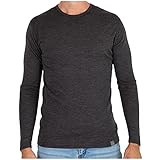
- PACKAGE INCLUDES: 1 – Merino Wool Men’s Merino Wool Thermal Crewneck Top in Charcoal Gray / XX-Large | MATERIAL: 18.5 Micron, 100% Merino wool, 250g/m2 | FIT: Fitted
- SUPER SOFT: 100% all natural superfine 18.5-micron Merino wool ensures comfort all day – no itch! EASY CARE: Mid-weight long sleeve crew top shirt is machine-washable and dryer-safe, so it’s ready when you are for your next adventure.
- BREATHABLE: Keeping you cool in summer and warm in winter, 250g/m2 weight interlock-knit Merino wool can be used as a base layer or mid-layer, but won’t weigh you down. COMFORTABLE & CONVENIENT: Quick-drying shirt features a loop for hang drying while camping, hiking, hunting, working, playing sports, skiing, snowboarding, or partaking in any outdoors activity.
- WICKING & ODOR RESISTANCE: Merino wool’s natural wicking and odor-resistant properties keep you dry and comfortable while active in cold weather. Through the process of wicking, Merino wool is the most breathable fabric and absorbs moisture better than any other fibers. Wicking refers to a fabric’s ability to pull moisture away from your body and keep you comfortable.
- EXCEPTIONAL CUSTOMER CARE: If your MERIWOOL Men’s Midweight Base Layer Crew Top doesn’t perform to your satisfaction, return it to us within 30 DAYS along with proof of purchase for a hassle-free refund, exchange, or replacement. Includes a 90 DAY limited manufacturer’s warranty.
100% Merino Wool – Men’s Midweight Quarter Zip – Warm Pullover – Midlayer

Whether you’re carving down a fresh powder run or trekking a rain‑slick trail, our 100 % Merino Wool midweight quarter‑zip pulls you through unpredictable weather with unmatched breathability and warmth—so you’ll stay comfortable no matter how the forecast shifts. Its 18.5 µm yarn delivers 235 g/m² density, giving a garment that sits at 363 g. Minus33, from 2004 New England wool, uses a stitch that wards off wind while keeping your skin dry with moisture‑wicking fabric. Mid‑weight performs from 0 ° to 60 ° C, you can wear it under a ski jacket or over a hiking shirt. UPF shielding protects against glare during sunny climbs today everywhere.
Best For: The best pair of mountaineers, winter hikers, and outdoor workers who need a lightweight, breathable midlayer that stays warm from freeze to heat and can be worn under jackets or on its own.
Pros:
- 100 % Merino wool is naturally moisture‑wicking, keeping you dry without overheating.
- The mid‑weight construction delivers warmth 0 °C–60 °C while remaining lightweight (363 g).
- Machine washable, durable, and with built‑in UPF protection for sunny climbs.
Cons:
- Natural wool can develop a scent after multiple uses; a soak between washes may be required.
- The price point is higher than many synthetic midlayers.
- Very fine 18.5 µm yarn may feel thin for those who prefer a bulkier, more insulating material.

- QUALITY MIDWEIGHT BASELAYER: 100% Merino Wool is super soft and extremely comfortable. Versatility and warmth make this three-season merino wool mock-neck thermal an essential part of your outdoor gear. Its moisture wicking properties means you won’t have to wash it as often so you’ll use even less water. Fits Sizes XS to 3XL in a regular fit. As well as Tall options. Minus33 offers a great size selection. Outfitting anyone from the Hard-at-Work to the Hard-at-Play.
- PERFECT FOR: Any activity really! Wear this quarter zip pullover as a base layer, mid layer, or outer layer. This will be your go-to for keeping you warm when you need it. Wear this skiing, hunting, snowboarding, ice fishing, camping, to work, the options are endless. This midweight quarter zip can be worn whether it's as low as 0 degrees or as high as 60. This is perfect for any season especially when the temperature is changing throughout the day.
- EXPERIENCED BRAND: Although there are many copy-cats on the market today, Minus33 has been a trusted brand since 2004. We see it all – from beautiful fall leaves, to white, snowy winters, to colorful springs and summers. We’re New Englanders, plain and simple. We’ve been hiking, camping, skiing, and everything else in between since we were kids. No amount of snow keeps us down, and we only continue to thrive in the summer.
- IMPORTED: As the legacy of a 100+ year old USA based woolen company, Minus33 knows quality and comfort in Merino Wool. We are committed to bringing you the best Merino Wool products at a reasonable price.
- TECHNICAL DETAILS: 100% 18.5 Micron Merino Wool 235 g/m2 Interlock knit construction. Garment Weight Size Large = 12.8 oz. (363 grams). UPF
100% Merino Wool – Midweight Womens 1/4 Zip – Midlayer

Want a midlayer that can keep up with sudden rain, cool winds, and bright sun? Because it’s 100 % merino, this mid‑layer feels buttery soft yet insulates like a jacket. The 18.5 µm fibers keep you warm without adding bulk, while the 235 g/m² density resists wind but stays lightweight at 8.8 oz. A 1/4‑zip pull‑on and mock‑neck let you layer quickly, and flat‑lock seams reduce irritation. UPF 50+ shields against sun. It’s wash‑ready—just toss it into the machine, tumble dry, and freshen with minimal washes that save water. Try it in every season, from spring showers to autumn breezes, and keep you energized.
Best For: outdoor enthusiasts, commuters, and anyone needing a versatile, lightweight midlayer that offers warmth, sun protection, and effortless care.
Pros:
- 100 % Merino wool with 18.5 µm fibers delivers buttery softness and excellent insulation without bulk.
- Flat‑lock seams, mock‑neck, and 1/4‑zip provide irritation‑free comfort and quick layering.
- UPF 50+ protection, moisture‑wicking, and machine‑washable design keep you dry and eco‑friendly.
Cons:
- May feel too lightweight for extreme cold or heavy snowfall.
- Limited to mid‑season climates; not a full‑sleeve heavy‑layer option.
- Price point may be higher than synthetic alternatives.

- QUALITY MIDWEIGHT BASELAYER: 100% Merino Wool is super soft and extremely comfortable. Versatility and warmth make this three-season merino wool mock-neck thermal an essential part of your outdoor gear. ENVIRONMENTALLY FRIENDLY: The best in easy care technology means your merino wool is machine washable and dryable. Our 100% Merino Wool is a renewable fabric. Its moisture-wicking properties mean you won't have to wash it as often so you'll use even less water.
- CRAFTED TO FIT: Sizes XS to 3XL in a regular fit. Minus33 offers a great size selection. Outfitting anyone from the Hard-at-Work to the Hard-at-Play.
- EXPERIENCED BRAND: Although there are many copy-cats on the market today, Minus33 has been a trusted brand since 2004.
- IMPORTED: As the legacy of a 100+ year old USA based woolen company, Minus33 knows quality and comfort in Merino Wool. We are committed to bringing you the best Merino Wool products at a reasonable price.
- TECHNICAL DETAILS: 100% 18.5 Micron Merino Wool 235 g/m2 Interlock knit construction with flatlock seams. Garment Weight Size Medium = 8.8 oz. (249 grams). UPF Rating 50+
First Lite ThermaGrid Merino Henley

When you’re out on the trail during unpredictable weather, the First Lite ThermaGrid Merino Henley delivers a 260‑gsm midweight merino wool grid that keeps you warm when wet while the built‑in anti‑microbial finish keeps you odor‑free, making it the go‑to midlayer for hunters and outdoor pros who demand durability, breathability, and reliable temperature control. It weighs 10.5 ounces and blends 56% merino wool with 40% polyester and 4% spandex, giving you softness, durable stretch. The grid weave boosts airflow, while the three‑button collar lets you adjust heat. Regular fit, long sleeves, and ribbed cuffs keep you moving during hunts.
Best For: serious hunters, outdoor pros, and anyone who demands a durable, breathable, and odor‑free midlayer that stays warm even when wet.
Pros:
- 260 gsm merino‑polyester grid for natural breathability and moisture‑wicking.
- Anti‑microbial and odor‑resistant finish for prolonged use in the field.
- Three‑button collar and ribbed cuffs give adjustable temperature control and unrestricted movement.
Cons:
- Midweight fabric may feel bulky for those wanting a lightweight tactical base.
- Polyester blend may not satisfy pure natural‑fiber purists.
- In extremely cold environments, additional layering may still be necessary.

- 260gsm midweight merino wool grid fleece blends performance merino into fabric for anti-microbial, odor-resistant, and warm-when-wet properties that make this the most effective midlayer in your hunting toolkit
- Classic three-button collar provides versatile temperature regulation and traditional styling, making this henley the perfect day-in, day-out piece for the toughest days in the field
- Stretch ribbed cuffs deliver unrestricted movement and secure fit during high-exertion activities like hanging stands, working dogs, tuning bows, or scouting your hunting property
- Built for performance across all seasons whether you're managing property, training dogs, or pursuing game, delivering the versatility serious hunters need from a quintessential midlayer
- 56% merino wool, 40% polyester, and 4% spandex construction at just 10.5oz balances natural fiber benefits with durability and stretch for reliable 365-day field performance
Factors to Consider When Choosing Merino Midlayers for Unpredictable Weather
You’ll want to evaluate the garment’s weight and how well it layers with your base and outer pieces.
Check its breathability and moisture‑wicking ability to keep you dry under different temperatures.
Make sure the fit feels right, the material meets your durability and care expectations, and it balances warming and cooling for shifting weather.
Weight and Layering
Because the weight of a merino midlayer determines how it balances heat, mobility, and moisture control, choosing the right range is key. Light, mid‑weight, and heavyweight options exist, but mid‑weight (≈200–300 g/m²) offers the sweet spot for unpredictable climates. At about 250 g/m², it layers easily—just slip it under a heavy coat when it’s cold, or pair it with a jacket when temperatures rise. Its interlock knit keeps you warm at night yet breathes during high‑intensity moves, so you never feel stifled. Merino’s water‑absorbent fibers wick sweat and dry fast, keeping you comfortable whether as part of a tri‑layer system. Therefore a mid‑weight core adapts to wind, rain, and cold without sacrificing mobility. This flexibility lets you tackle any itinerary without gear changes or added weight.
Breathing and Moisture
Since the 18.5‑µm diameter of superfine merino fibers doubles the surface‑to‑volume ratio, the knit breathes like high‑performance synthetic fabric—air moves freely and sweat evaporates almost as fast. When you climb, the layer can soak up about 30 % of its weight in liquid, keeping your skin dry while pushing moisture outward through microscopic capillaries. That 1 cm³ channel pushes water at speeds up to 5–10 mm °C⁻¹, narrowing the temperature gap between skin and air as you work harder. Interlock stitching traps air pockets, so breathability stays high yet the fabric stays dense enough—around 250 g m⁻²—to trap heat when temperatures dip. Plus, the wool’s natural antimicrobial finish fights sweat‑borne bacteria, so the garment keeps odor‑free even during long, unpredictable weather sessions and you can breathe deeply and comfortably today.
Fit and Comfort
With the weave already keeping sweat out, the next factor that shapes your experience is fit. A fitted cut that follows your body’s natural shape cuts bulk and lets you move freely, especially when you need a full range of motion. Regular‑fit styles sit at mid‑waist, striking a balance between freedom and compression so the garment stays snug enough to manage sweat without feeling restrictive. Adding about 4 % stretch with elastics or spandex lets the knit glide with your limbs, keeping you comfortable during high‑intensity moves and breathable. A weight near 235 g/m² keeps you warmed while staying lightweight, letting you layer without excess bulk. Choosing the correct size across XS to 3XL means the garment fits your torso and sleeves, preventing chafing or discomfort.
Durability and Care
You achieve durability by starting with the right weight and fiber fineness—midlayers that weigh 250–260 g/m² and use 18.5 µm Merino fibers resist pilling and survive up to 300 wash cycles. When you machine‑wash, stick to 30 °C on a gentle cycle—that keeps the fibers elastic and preserves loft. Tumble dry on low heat, or better yet hang it to avoid shrinkage and keep the garment looking new. Choose seams that are interlock or flat‑lock knit; they spread tension and extend life, even in excess use. Use a wool‑specific, pH‑neutral detergent, skip bleach, and it will keep dyes intact while boosting durability. After use, quick‑dry loops or hanging hang helps moisture evaporate fast, cutting mildew risk and preserving strength. Follow these steps, and your midlayer stays resilient through adventures.
Temperature Regulation
What makes a Merino midlayer truly versatile is its knack for balancing heat retention and breathability across a wide temperature swing. You’ll find that the ultra‑fine 18.5 µm fibers form micro‑cavities that trap body heat in cold while letting excess moisture escape, keeping you comfortable from 0 °C to 60 °C. A mid‑weight density of about 235 g/m² in an interlock knit offers insulation without bulk, striking the right trade‑off. The wool can absorb up to 30 % of its own weight in sweat, pulling moisture away from your skin and preventing overheating. 250 g/m² lightweight fabrics lock in warmth yet quick‑dry loops let sweat evaporate, so you remain cool during high‑intensity activity. Its natural odor‑resistance keeps temperature‑regulation performance intact over continuous wear. Ideal for unpredictable outings, it adapts swiftly.
Sun Protection
Because Merino wool’s ultra‑fine 18‑µm fibers scatter light, the material naturally blocks over 98 % of UV rays, giving you a UPF 50+ rating right off the bat. You’ll benefit from that protection regardless of color or finish, since the fiber’s tiny diameter helps disperse harmful rays. Unlike polyester, merino fibers don’t lose UV‑blocking power as you wash them, so each wear keeps the same high performance. A 250‑g/m² midlayer can retain up to 60 % of its UPF after 30 washes, far outpacing synthetics that drop protection after just 10–15 cycles. Layering a merino top over a base‑layer creates a cumulative barrier; properly overlapped fabrics can achieve UPF 100+. This dual‑layer setup shields you better than any single garment alone, making your outdoor adventures safer and more comfortable.
Product Longevity
While Merino’s fine 18‑µm fibers block UV, they also give the fabric exceptional resilience. When you choose a midlayer, look for 18.5 µm wool at 200+ wash cycles; this diameter keeps tensile strength and elasticity high, so the garment stays soft. An interlock knit at 235–250 g/m² spreads stress, preventing seam failure and extending life. Machine‑washable and dryer‑safe builds thwart harsh chemicals, preserving fiber integrity. Quick‑dry loops and moisture‑wicking get the fabric dry, cutting mold and mildew that could shorten durability. And because Merino’s natural odor‑resistance stops bacterial buildup, the material stays clean, visually and tactically, for longer. These features mean you spend less on replacements, and your midlayer stays ready for the next adventure, irrespective of how often you pack it into a backpack today.
Frequently Asked Questions
How Long Does a Merino Midlayer Last With Regular Use?
Usually, a merino midlayer endures about 3 to 5 years with regular use, assuming you wash it gently and store it properly. Because merino fibers are naturally resilient, they shrug off everyday wear and tear. But if you toss it in the dryer or expose it to harsh chemicals, its lifespan shrinks. By following care guidelines, you’ll keep it performing comfortably for years and keep it fresh for you everywhere.
Can Merino Fabrics Be Machine Washed at High Temperatures?
Yes, you can machine wash merino, but you’ll want to avoid heat that could damage the fibers. Use a gentle cycle with cool or warm water, and a mild detergent. Turn garments inside out, then tumble dry low or air‑dry. High temperatures can shrink, stretch, or degrade the fabric, so keep the heat low. After washing, lay flat to finish drying, and store folded to preserve shape for smooth layers.
What Is the Environmental Impact of Harvesting Merino Wool?
Harvesting merino wool can be relatively sustainable, especially when sheep are grazed on natural pastures that prevent soil erosion. You’ll benefit from low carbon emissions, since sheep produce no synthetic fibers. However, overgrazing can deplete soil nutrients and lead to habitat loss. Water use for washing and processing adds pressure, and improper waste management may pollute waterways. Sustainable farms balance these factors, reducing overall environmental impact, and protecting future generations.
Do Merino Midlayers Work Well With Synthetic Outer Shells?
Not convinced that a merino midlayer will stay cool under a synthetic shell? It’s true it’s natural, but it works wonderfully. You’ll find that merino’s breathability lets sweat escape while the shell keeps wind and rain out. The combination gives you light, moisture‑wicking warmth that automatically adjusts to activity level. You’ll enjoy a dry, comfortable hiking or climbing day, keeping your wrists and shoulders protected and giving you confidence outdoors.
Are There Hypoallergenic Options for Sensitive Skin?
Yes, there are hypoallergenic merino midlayers designed specifically for sensitive skin. These garments use ultra‑light, finely spun merino fibers that minimize itchiness and are treated with no dyes or chemicals. Many brands label them “eczema‑friendly” or “Dermatologist‑tested,” ensuring they won’t trigger reactions. Pair them with a breathable, chemical‑free outer shell, and you’ll stay comfortable and allergen‑free even on unpredictable days, and you can even enjoy extended outdoor adventures without discomfort.
Conclusion
Imagine you’re a seasoned explorer trekking through shifting storms, and your midlayer is your weather‑warding shield. Each fine Merino fiber stitches a protective barrier, whispering warmth while breathing as you pause. Embrace it, and you’ll glide through rain, gust, and chill, trusting nothing can breach the calm. Let your choice be the spell that balances strength and comfort, turning every unpredictable weather into a predictable, safe journey. And your confidence grows with breath you take.
merino midlayer, outdoor gear, unpredictable weather